
The Channel Where You Never Saw a Face. You Stayed Anyway.

It is a Sunday afternoon. The dishwasher is running. The kitchen radio has been on for an hour and you have not been listening to it. You are watching, on your laptop, a video about whether sea snakes are overpowered. The narrator has been talking to you for nineteen minutes about venom delivery and dive times and convergent evolution. You have laughed twice. You have learned three things. You will recommend this channel to a friend in the group chat before bed. When the video ends and the channel page loads and the thirty thumbnails grid into place, you notice something for the first time, even though you have been watching this channel for two years. Not a single thumbnail has a person on it. There is no creator photo. The man on the other end of the microphone, who has been making you laugh on Sunday afternoons for two years, has no face.
You would not recognize him at a coffee shop. He would not recognize you, either, of course - he does not know you exist - but it is the symmetry that surprises you. The relationship is two-way unrecognized. The whole thing has been built on a voice, a writing style, a taste in jokes about reptiles. The man could walk past you on a Tuesday and you would have no reason to look up.
YouTube was supposed to be a face-first platform. The thumbnail panel was designed around portraits. The algorithm was tuned for shock-face reactions. YouTube has said, repeatedly, on the Brandcast stage, that creators are the new celebrities. The whole logic of the system says: a person on screen, looking at you, makes you trust them. And yet, on the same system, some of the most-loved channels - the channels with the deepest commenters, the longest watch sessions, the most generous reviews - belong to people you have never seen.
Three channels. Eleven million strangers. Zero faces.
I went and counted, slowly, on a Sunday: three channels I personally watch where the host has never shown a face on a regular video. The combined audience is large enough to fill a midsize country. Their watch counts are above a billion. Their thumbnails do not contain a single human face among them - not in the foreground, not in the background, not even reflected in something. The channels do not have a person on the cover. They are channels of voices, of taste, of edits.
The first channel: an animal tier list, narrated by a microbiologist.
TierZoo has 3.93 million subscribers and 490 million views. The host, according to his Wikipedia entry, is Patrick "Patch" Lacey, a 2017 University of Wisconsin-Madison microbiology graduate. He launched the channel the summer he graduated. The format is a tier list - the same kind fighting-game communities make for characters - except the characters are animals, and the game is being alive on this planet. Crocodiles get an S-tier ranking. House cats are A. Most insects, S+. He uses video game sound effects, gameplay footage overlays, and the running joke that animals are "builds" playing a game called Outside.
You hear his voice for the first time the way you hear most voices on the internet - mid-sentence, on autoplay, while you are doing something else. He is calm. He is dry. He has the kind of pacing a teacher gets after enough semesters. He never shows his face on the channel. There is a single conference photograph from Open Sauce 2025 in his Wikipedia entry; a few hundred attendees met him there. The other 3.92 million people who subscribe know him as a voice.
The thing that is supposed to be the disadvantage - no face - is the format. The audience is not watching him; the audience is watching the animals. The narrator is the friend in the next chair pointing things out. The face would be in the way.
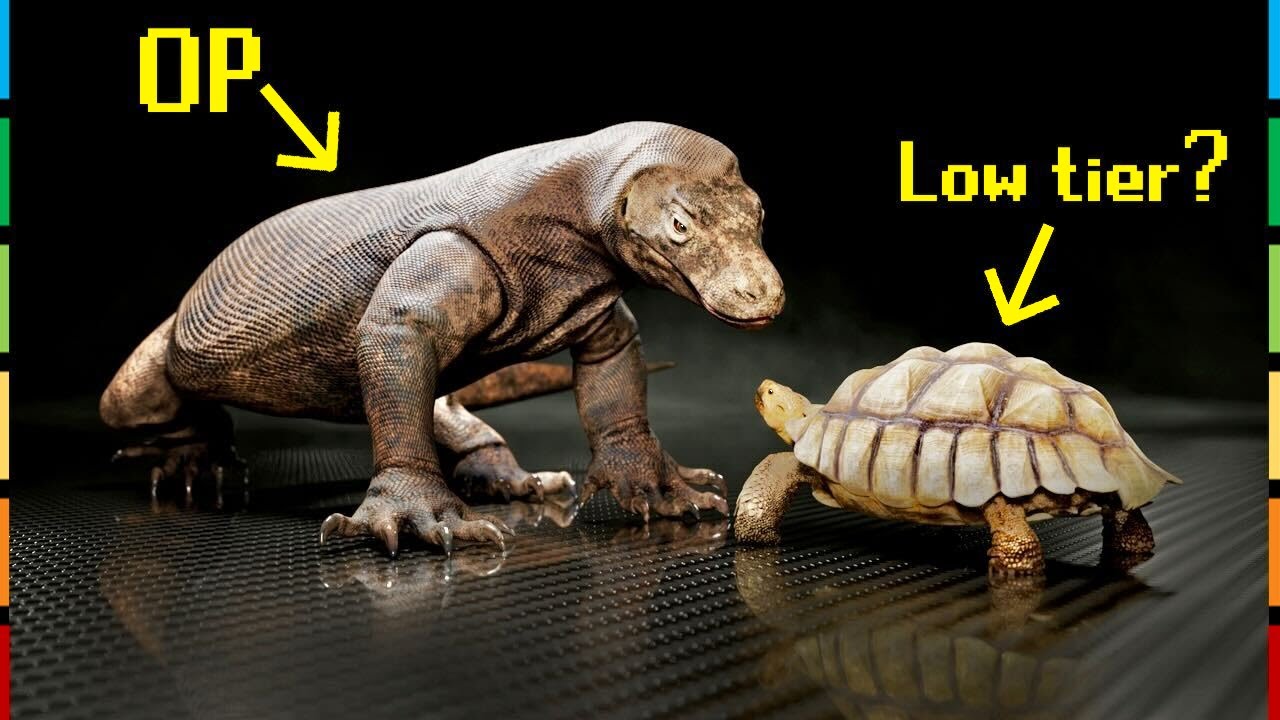
Watch a thumbnail panel of TierZoo for ten seconds and you will see what nobody is supposed to be able to do on this platform: build a brand without a person at the centre of it. The brand is a font, a color palette, a video-game iconography, and a voice that has not changed pitch in eight years. There is no Patch Lacey hero shot. He is the off-screen voice in his own show.
The second channel: a fourteen-year-old mystery essay.
LEMMiNO has 5.89 million subscribers and 676 million views. The channel was created in February 2012 - older than Snapchat, older than the iPad Mini, older than half of YouTube's own current product features. The creator is a Swedish video essayist named Mathias Karlsson. The channel publishes one long-form piece per year, sometimes one every two years, almost always about an unsolved mystery, a piece of code, a Cold War operation, a buried piece of history. The 2014 video on Cicada 3301 - an internet puzzle that Wikipedia cites as one of the canonical attempts to document the phenomenon - has been watched 25 million times.
You will not find him on screen in any of them. The format is voice over cinematic footage, archival photographs, slow camera moves across documents, and a music score he writes himself - LEMMiNO has a second channel just for the instrumentals. The mystery is always the subject. He is the patient narrator behind it. The signature audio is the slow synth chord opening; the signature visual is the white-text-on-black title card. The signature absence is him.

Read the top comments under any LEMMiNO video and you will see something almost devotional: "I have been waiting two years for this." "Every time I see a new upload I know I'm losing the next hour." "Your voice is the only voice I trust to tell me this story." Nobody mentions his face. Nobody asks for him to show up on camera. The face is not the point. The face would, in fact, ruin the point. The whole appeal is that a single careful person sat with this mystery for a year and then quietly walked it through with you. Putting his face on the thumbnail would suggest the show is about him. The show is about the mystery; he is the friend who brought it over.
The third channel: an editor whose only co-stars are other people's films.
Lessons from the Screenplay has 1.5 million subscribers and 66.6 million views. The host is Michael Tucker. Every episode is a film analysis in the cleanest essay form on YouTube: voiceover over clips, with text overlays, with screenplay pages, with a careful walk through the way a screenwriter built a particular emotional architecture. The Whiplash analysis - paired with Black Swan, the two obsessed-artist films side by side - is the kind of essay that gets emailed to film students and ends up cited in coursework. The host does not appear in the frame at any point. The frame is reserved for the films he is teaching.

This is a different kind of absence than the other two. TierZoo is faceless because the format does not require a face. LEMMiNO is faceless because the mystery is the protagonist. Lessons from the Screenplay is faceless because the films are the protagonists. The host is choosing not to put himself in front of them. He is the museum guide standing slightly off-camera, gesturing at the painting, trusting that the audience came for the painting.
What ten hours of a faceless channel actually teaches you about the person.
I want to be careful here. You do not learn nothing about these creators because you have not seen their faces. You learn the opposite. Ten hours of watching one of these channels teaches you more than ten hours of most vlogs ever could - because the channel is not a vlog, the channel is taste, choices, edits, voice, pace, the things the creator thinks are funny, the things they think are sad, the questions they decide to ask. The face is one signal. These channels do without it. Everything else in the signal list is doing more work to compensate.
Look at the bottom of the chart. The platform - the platform's algorithm, its thumbnail UX, its CEO speeches - has been telling us for fifteen years that the bottom row is what matters most. The face. The face in the thumbnail, the face in the first frame, the face on the channel banner. The face is the thing that supposedly turns a stranger into a friend. The bar at the bottom of this chart is the bar that is supposed to be filled all the way up. It is instead empty - and millions of people have decided they are fine with that.
Three channels. Three reasons the face was not the point.
The three channels do not avoid the face for the same reason. The thesis of this column is that the face was never the point - but it is worth being honest that each channel proves the thesis differently.
| TierZoo | LEMMiNO | Lessons from the Screenplay | |
|---|---|---|---|
| Genre | Comedy + biology | Long-form mystery | Film criticism |
| What is in the frame | Animals, game UI overlays | Archival photos, slow camera moves | Film clips, screenplay pages |
| Why the host stays off-screen | The animals are the show; he is the friend pointing | The mystery is the protagonist; he is the patient narrator | The film is the protagonist; he is the museum guide |
| What the audience gets in place of a face | A dry calm voice and a decade-old running joke | A patience signal: "I sat with this so you don't have to" | Reverence for the source material, modeled in the edit |
| Years on YouTube | 8 (since 2017) | 14 (since 2012) | 10 (since 2016) |
| What changes if he shows the face tomorrow | Nothing. The audience would be polite about it and keep watching the animals. | Something would shift. The mystery would have to share frame. | A lot. The films would have to share frame with their critic. The whole reason for the channel would change. |
Why a voice can carry the room the way a face is told it has to.
The platform is not wrong that the face matters. The face is a real signal. Looking into a camera is a real act of intimacy - the parasocial-friendship piece that this column ran a year ago was an argument for taking the on-camera relationship seriously. The face is what makes a vlog feel like a video letter. The face is what makes a tutorial feel like a friend who came over to help.
But the face is not the only thing that makes a stranger feel known. The voice is older than the face by a factor of millennia. We have been recognising voices since long before we were recognising photographs. Long before the camera existed, there was a person on the other side of the wall, or a person who read a book aloud at the fire, or a person on a static-y radio in the kitchen of someone's grandmother. The recognition was the voice. The face was a bonus and often a guess.
Earlier in this column's run I wrote about the voices we'd recognize anywhere - Bob Ross, David Attenborough, Internet Shaquille. Those creators have shown a face. The face is on the dust jacket, so to speak. But the thing that actually keeps them company in your kitchen is the voice, and the voice would do its work just fine if the face had never been on the cover. A 2026 study in Behavioral Sciences by Li Wen and colleagues - which I cited the first time - found that listeners of voice-only and voice-led creators reported social-support scores averaging 5.25 out of 7, with participants describing the auditory parasocial bond in terms like "a soft, rich voice naturally conveys warmth and approachability." The voice has been doing the parasocial work all along. The face has been helping. The face has not been required.
What the faceless creators on YouTube are quietly demonstrating is that you can run the whole experiment without the face, and the audience will still arrive. The trust line will still get drawn. The relationship will still be a relationship. The viewer will still recommend the channel to a friend on a Sunday night. The dashboard will still show a watch graph. The room is still there. The room never needed the face.
What I think you should do
Open the channel page of one of these three creators - or a faceless creator of your own, you almost certainly have one - and scroll their thumbnails for a minute. Notice that you are not missing anything. Notice that the thumbnails do not feel cold to you. Notice that the absence of a face has not stopped you from feeling like you know them.
The platform's design assumes you cannot trust a stranger you have not seen. The platform is wrong about this. You can. You always could. The radio voice you fell asleep to as a child knew this. The columnist whose photograph was never run with their piece knew this. The novelist who never went on tour knew this. The voice you have been listening to on Sunday afternoons for two years, telling you about sea snakes and the obsessed artist and the unsolved internet puzzle, knows this. The face was the platform's idea. The relationship was always yours.
You walked into the room without it. You stayed anyway.
Join the conversation