
Somebody Made This for You. They'll Never Know.

There's a specific kind of comfort in a YouTube tutorial. The voice is usually calm. The camera is usually slightly off-center. The person has twelve thousand subscribers and uploaded this three years ago. They don't know you're watching. They don't need to know. They made it anyway - for someone exactly like you, before you even existed as a problem to solve.
That scene plays out billions of times a day. A Pew Research study found that 87% of YouTube users say the platform is important for learning how to do new things - and 51% say it is very important. More people use YouTube to learn than use it to pass time. That isn't a footnote. That's what the platform actually is for most of the people on it, even if the trending tab has other ideas about what deserves attention.
The Math Teacher Who Made It Beautiful
Grant Sanderson was studying math at Stanford when he started 3Blue1Brown as a side project. Not a business plan. Not a content strategy. A programming project that needed a goal - so he built an animation library in Python, and to test it, he made a video and uploaded it. That was 2015. He has 8.15 million subscribers now and 725 million views across 233 videos - an average of around 21 videos a year, for eleven years. No drama. No controversies. No viral moment you could point to. Just the same question, over and over: what would this look like if you could actually see it?
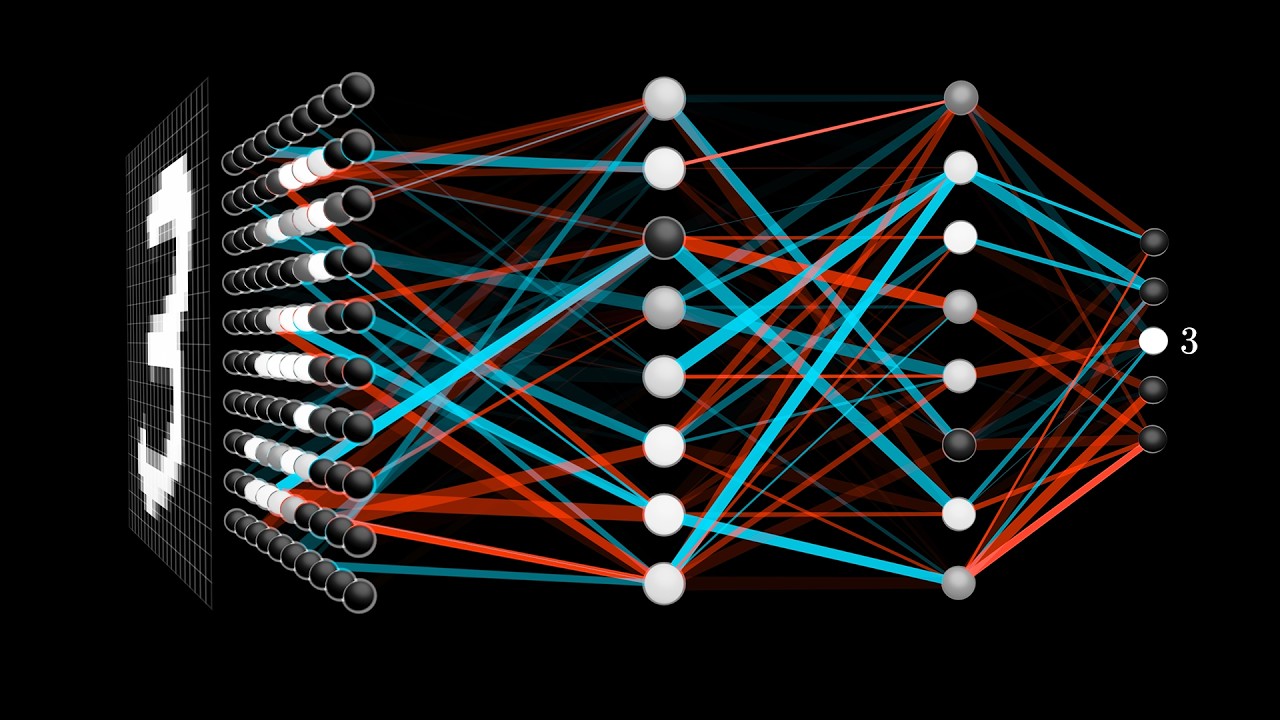
His philosophy, as he described it on the 3Blue1Brown about page, is that "any such love begins with deep understanding." He means love of math. But the principle is wider than that. He isn't performing expertise. He's sharing a perspective. The video below is the clearest example I know of what that looks like when it works - a question most people find frightening, answered in a way that makes it feel like something you could hold.
The Chemist Who Left to Stay
Nigel Braun had a different starting point. He studied biochemistry at McGill University, worked in an organic chemistry lab, and had just started a master's degree when he decided that something needed to change. Chemistry - this rich, strange, endlessly surprising science - was being taught in a way that made people actively dislike it. He started filming his experiments on the side. Eventually, he left the master's program entirely. The channel is NileRed, named after a fluorescent dye in a chemistry textbook. It has over ten million subscribers now.
The video below is NileRed at his most characteristic: an absurd question taken completely seriously, worked through over hours of real lab time, and explained in a way that makes you feel like you could follow along if you just paid close enough attention. That combination - absurdity and precision - is exactly what good teaching feels like when someone genuinely loves what they're explaining. The teaching is a byproduct of the curiosity. That's the detail that stays with me.

The Bargain They Don't Talk About
Neither of these creators trends. Their content doesn't spike on a Friday and disappear by Sunday. Tutorial videos don't get reaction videos made about them. They don't get the algorithmic momentum that rewards drama, outrage, or an open-mouthed thumbnail. What they get instead is something quieter: views that accumulate like interest - slowly, consistently, for years. A 3Blue1Brown video uploaded in 2016 still gets watched this week, by someone who just started thinking about machine learning. A NileRed chemistry explainer from five years ago is someone's first introduction to the subject right now, at midnight, because school never made it make sense.
Ethan wrote this week about subscriber ghosts - the gap between what the subscriber number says and what's actually happening. For tutorial creators, there's a parallel gap: between what the algorithm notices and what the impact actually is. The metric system wasn't built to measure "helped someone understand something they'd been confused about for years." It was built to measure clicks, retention, and shares. A video that quietly teaches a million different people a million different things over several years registers as nothing special in that system. Just a steady, undramatic line on a chart nobody's watching.
"Any such love begins with deep understanding." - Grant Sanderson, on what 3Blue1Brown is trying to create
What makes these creators different is not production quality or upload frequency. It's that they made something useful without requiring anything back from you. No parasocial contract. No loyalty loop. No upload schedule you feel obligated to follow. Just the video - there when you need it, invisible when you don't. That is a specific kind of generosity that is hard to name. Not friendship. Not service. Something the internet invented and hasn't given a word to yet.
The best teacher you'll ever have on YouTube might have 9,000 subscribers. They filmed something difficult, explained it carefully, and uploaded it four years ago. They haven't thought about that video since. Tonight, at an hour when asking for help feels too hard, you'll find it. A calm stranger will walk you through the thing in twelve minutes. You'll close the tab. They'll never know you were there.
That's the whole deal. It's a pretty good one.
Join the conversation