
You Asked the AI for the Steps. The Person Was the Reason You Were Watching.

The other night I was on a video call with a friend whose dishwasher had stopped draining. She told me she had just asked YouTube to walk her through fixing it. I was about to say good idea, who did she watch, before I realized she had not watched anyone. She had typed her problem into YouTube's new conversational search and read a paragraph it generated. It had four steps. She did three of them. The fourth one took her about forty minutes longer than it should have, because the AI had skipped the part where a person, standing in his own kitchen with his hand on the panel and an apologetic look, would have said, this is the part that fights you, give it a minute.
She got the answer. She did not get the company.
This morning Ethan wrote about YouTube's new Ask features - the Ask button inside the player that summarizes a video into timestamped steps, and the search-wide Ask YouTube experiment that lets you type a question in plain English and read a paragraph back instead of clicking a video at all. His piece is about the creator economy: the rambling intro you skip was the part the pre-roll ad ran on. The sponsor segment Gemini bypassed in a single query was the part the creator negotiated for. The video that gets cited as the AI's source gets no view, no watch time, no money. That is the visible bill, and it falls on the creator.
There is another bill the AI doesn't put on the receipt. It falls on the viewer. It is the part where you did not meet anyone.
A Tutorial Is Two Things at Once
A good tutorial does two jobs in the same ten minutes. One is the procedure. Tie this end over that one. Add the cumin before the tomato paste. Hold the chord with the pad of your finger, not the tip. Those steps are extractable. An AI can pull them out and hand them to you in a list. You can follow the list and the dishwasher will drain, the chord will ring, the stew will be edible.
The other job is the company. A person showed up at your kitchen table or in your car or in your bedroom, on the night you needed it, and walked you through something. Their voice was patient. Their hands were a little nervous, or maybe a little proud. They knew where the screws were. They knew where you were going to get stuck because they had been stuck there too. They were not going to make you feel bad about asking. That part of the tutorial is the part the AI cannot pass along. It is not in the transcript. It is what the transcript is wrapped around.
Sydney Butler at HowToGeek called the Ask button "probably one of the best features for users YouTube has added in ages" for exactly the reason you would think: tutorial videos are padded, and pulling the steps out of the padding is genuinely useful. He is right about that. The padding is also the part where the teacher was.
Three People Who Were the Whole Reason
I want to put three faces on this. Three creators on three different shelves of YouTube, three different niches, three different audiences. The thing they share is that they are the reason their video is worth watching. The procedure inside their video exists in a hundred other places. If you wanted the steps you could have gotten them from a wikiHow page in 2008. You did not. You went to find a person.
1. The Dad Who Made the Channel Because He Did Not Have One
Rob Kenney's father left when he was fourteen. He spent his adult life teaching himself the small things he was supposed to have been shown - how to tie a tie, how to shave, how to fix a running toilet, how to change a tire on the side of a road. In 2020, late in his fifties, he started a YouTube channel called Dad, how do I? The premise was just that he would make the videos he wished someone had made for him. He calls the viewer kiddo at the end of each one. He says he is proud of you for learning it.
He has 5.52 million subscribers now. The channel went viral when somebody posted his backstory on Reddit. People did not subscribe because his knot tutorial is the cleanest one on YouTube. People subscribed because he is doing for strangers what he could not get done for himself. Asking the AI to summarize his tie video for you is not unkind. It is just incomplete. The procedure is the four-fold knot. The reason it works is the kiddo at the end.

Three and a half million people watched a man do this on camera. Most of them already knew what a knot was.
2. The Cook Who Is Telling You a Different Story
Max Miller's channel is called Tasting History. He makes a recipe from antiquity each week and tells you the story of who ate it and why. The episodes have titles like The Brutal Life of a Medieval Butcher and Dining on the Supersonic Concorde. He has 4.28 million subscribers and 857 million total views, and he started the channel in late 2019 because he had been laid off from Disney and needed something to do.
If you asked the AI for a recipe for Hammurabi's Kanasu stew, it would give you one. The recipe is on a four-thousand-year-old cuneiform tablet and is, by the standards of Babylonian cooking, quite simple. Lamb. Salt. Beer. Some herbs whose names are arguments. What the AI cannot give you is the half-hour of Max Miller in his kitchen telling you about the scribes who recorded it, the family that probably ate it, the way you have a quiet meal in common with somebody who has been dead for forty centuries. The recipe is the excuse to spend time with him. The procedure is two paragraphs. The video is sixteen minutes long because the procedure was never the point.
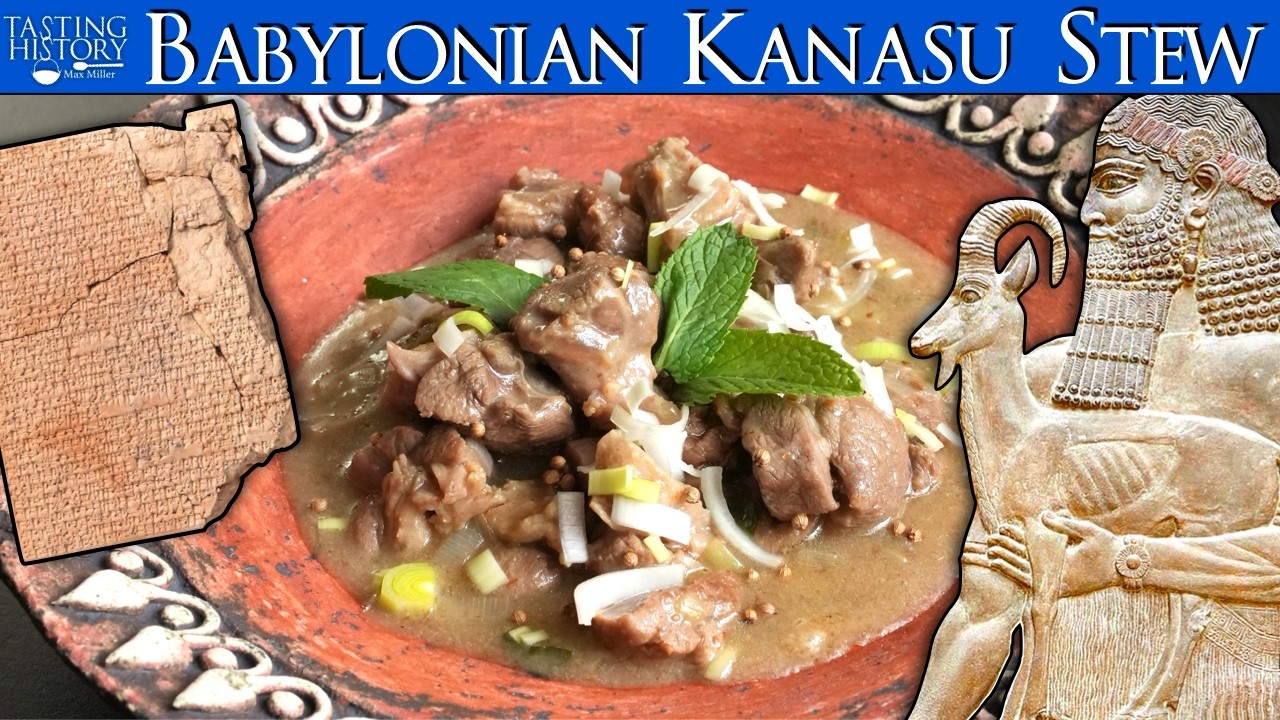
Six hundred and seventy thousand people watched a man make stew from a four thousand year old tablet. The stew was not the reason.
3. The Guitar Teacher Who Has Been on YouTube Longer Than YouTube
Justin Sandercoe runs JustinGuitar. His most-watched lesson, Super Easy First Guitar Lesson, has been viewed over seventeen million times. There is a generation of self-taught guitar players who learned their first chord from him. He is calm in a way that you cannot fake. He has the patience of somebody who has watched a thousand strangers' fingers fumble through G to C and has decided that fumbling is fine. He waits. He repeats. He apologizes when his explanation goes long.
The AI can hand you a list. Place your index finger here, your middle finger there, strum across these four strings. The list is accurate. It is not what a beginner needs. A beginner needs somebody on the other side of the screen who has decided in advance not to make them feel stupid. Justin Sandercoe has decided that. The AI has not decided anything. It is producing text.

Seventeen million people sat in their bedroom with a guitar in their lap and a man on a screen, who waited.
What the Summary Gives You and What It Quietly Takes
I want to be honest about what the Ask button is good at. It is good at the thing the algorithm always promised and never quite delivered: getting you to the right minute of the right video for the question you actually have. That has real value, especially when you are at a hardware store with a leaking pipe and not at a kitchen table with a cup of tea. The viewer's case for the feature is real. It is not a strawman.
But the trade has more sides than the feature page lists. The Pew Research Center found in 2018 that 87% of YouTube users say the platform is important for learning new things, with 51% calling it "very important." Among 18 to 29 year olds, 53% said very important; among adults 65 and over, 41% said the same. That is a portrait of an enormous mass of people using YouTube as their continuing education, their evening shop class, their Saturday afternoon teacher. They are not picking it because of the speed. They are picking it because of the company.
YouTube as Informal Teacher
Share who say YouTube is "very important" for learning new things
Source: Pew Research Center, "Many Turn to YouTube for Children's Content, News, How-To Lessons," November 2018, U.S. adults who use YouTube.
And the bond is not abstract. Google's own 2017 research with YouTube viewers found that 40% of millennial subscribers said their favorite creator understood them better than their friends did. That sentence sounds dramatic until you remember what it actually says: a stranger on a screen, whom you have never met, is doing the job that one of your closest people was supposed to be doing. That is not a metric. That is a quiet ask for company.
A tutorial is two things at once. The procedure is the part the AI can hand you. The person walking you through it is the part you did not know you came for.
The Person on the Other Side of the Screen
I keep thinking about what a tutorial actually does when it works. You open it because you needed help. You did not get the help from the people in your life - because they were not there, or because you were embarrassed to ask, or because they would not have known anyway. So you went to a screen. The screen had a person on it. The person did not know you. The person taught you. You felt, for ten minutes, like you had someone.
An AI summary is the same minus that. You needed help. You did not get the help from the people in your life. You went to the screen. The screen had a paragraph on it. The paragraph taught you. You felt, for ten minutes, like you were a faster learner than you used to be. Both things technically work. They are not the same medicine.
The fourth step is the giveaway. When something gets hard, the AI does not know to say this is the part that fights you. It does not know because it has never been the one fighting it. The person on the video has. The person on the video is, in fact, the database of all the small ways the procedure can go wrong, encoded as a single human who looks at the camera at the right moment and tells you they got stuck here too. That database is what you came for. You did not know it.
What the AI Can't Be Trained On
The strangest part of asking the robot to summarize a tutorial is that the things it is trained on cannot include the things that actually teach. The transcript carries the words. It does not carry the pause Rob Kenney takes before saying kiddo. It does not carry the way Max Miller almost giggles when the four-thousand-year-old beer foams in the pot. It does not carry the patience in Justin Sandercoe's voice when, for the sixteenth time in a single lesson, he says that is okay, just try it again, your fingers will work it out. The summary is the bone of the lesson. The teacher was the marrow.
This is not an argument for never using AI summaries. They are good. They are useful. They will save you time. So does a microwave, and people still cook dinner. The dinner is not just the calories. The lesson is not just the steps. Asking the AI to summarize a tutorial is fine. Asking it to replace the tutorial is a category error. You will get the answer and miss the appointment.
What I Think You Should Do
Ethan made the case for the creator economy this morning. He is right. The cited-but-uncompensated video is going to be a real problem for the people whose work taught a generation of strangers how to wire a switch, debone a fish, change a transmission filter, change their own minds about whether they were the kind of person who could try. I agree with everything he wrote and I have nothing to add to his analysis.
This is my add. Sometimes, when you go to YouTube for a tutorial, do not ask for the summary. Click the video. Let the person be in the room. Watch the dad in his garage say kiddo at the end. Watch the cook in his kitchen tell you the part about Babylon. Watch the guitar teacher wait. The procedure is the same procedure either way. The presence is the only thing the AI cannot serve you and it is, on a Tuesday night with a leaking dishwasher and nobody in the apartment but you and a phone, half the reason the platform was ever worth anything in the first place.
You can ask the robot for the steps. The person was the reason you were watching.
Join the conversation