
The Title Didn't Promise Anything. You Watched It Anyway.

Think back to the last video you watched all the way through. Not skimmed. Not closed at the second mid-roll. Watched. Now look at the title. Was it shouting at you? Was it withholding the punchline? Did it promise that you would not believe what happened next?
Probably not. The titles that earn the whole sit are usually the calmest words in your feed. They tell you what is inside. They do not flirt. They do not bait. They sound like a sentence someone said out loud once, decided was accurate, and left there.
Ethan wrote this morning about YouTube's new global rollout of title A/B testing, and the surprising metric the platform chose to optimize for. The tool measures watch time per impression, not click-through rate. A title that gets clicks but loses viewers in the first minute counts as a loss, not a win. As he put it, a title that promises something the video does not keep is "a lie with extra steps." The platform finally agrees.
Here is what I have been turning over all evening. The creators who never needed a title-testing tool already knew this. They have been writing honest titles for years.
The Title That Just Says What It Is
The best argument for honest titles is to read three of them back to back. Watch where your eye stops. Watch which one your hand reaches for the cursor on.
"This Spillway Failed On Purpose."
That is a Practical Engineering video. It is by Grady Hillhouse, a civil engineer in Texas, and it has been watched over six hundred thousand times. There is no mystery left in the title. The spillway. Failed. On purpose. He has told you what happens, why it happens, and that it was supposed to. And yet the click-through is good and the watch-through is even better, because the title is not a tease. It is a contract: I will explain to you, with footage and a tabletop model, why an engineered structure was built to break. Watch and you will leave knowing something you did not know.
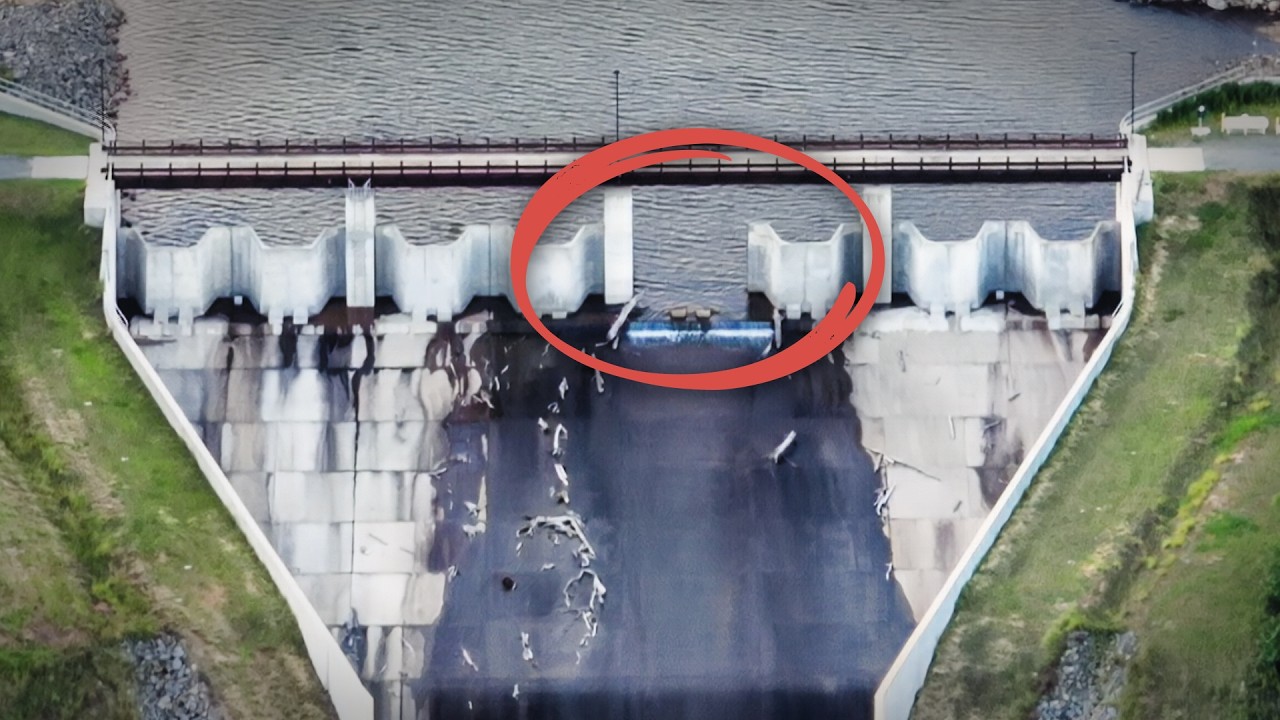
Six words. The whole video is in them. The watch-through is the proof.
Compare that to the version a clickbait title generator would have given Grady. "You Won't Believe What This Engineer Did to a Dam." "I Sawed a Spillway in Half - HERE'S WHAT HAPPENED." Both would probably score a higher CTR for the first day. Both would crash the second metric, the one YouTube now actually cares about. Watchers would arrive expecting destruction porn and leave halfway through a calm explanation of design loads. The algorithm would catalogue them as a betrayed audience, and the channel would get pushed down.
YouTube has, in other words, built a machine that finally rewards Grady for telling you the spillway failed on purpose.
"A Heavily Opinionated Guide to BLT Sandwiches"
The second creator I want you to meet writes titles like he is writing diary entries. His name on the channel is Internet Shaquille - in real life he is a former line cook from Atlanta named Shaq, and his videos are the most patient sandwich content on the internet.
His most-watched piece is called "A Heavily Opinionated Guide to BLT Sandwiches." Not "The PERFECT BLT (You're Doing It Wrong)." Not "I Tried 17 BLTs So You Don't Have To." Just: a guide, that is heavily opinionated, to BLT sandwiches. The viewer arrives knowing exactly what is on the table. He has opinions. They are about BLTs. He will tell you what they are.

The whole channel reads like this. "Shake 'n Bake is DEAD." "The 2nd-Best Side Dish I've Got." "The Food Could Always Be Better." A hand-written sandwich board, in title form.
What I love about Shaq's titles is that they sound like they were written before the video was filmed and never revised after. They are not the result of split-test rounds. They are the sentence that was true the day he made the video. That kind of title trades viral upside for what marketers would call a low betrayal rate. You click for a heavily opinionated BLT guide. You receive a heavily opinionated BLT guide. The transaction is honest, and over time it makes the channel feel like a person, not a content engine.
A title is a promise made in advance. The honest title is the one you can keep without being clever. Most creators have been graded on how compelling the promise sounds. The new metric grades them on whether they kept it.
"The World Is Slowly Running Out Of Sand"
The patron saint of the plain title is Tom Scott. He wears a red T-shirt in front of a thing, and he tells you about the thing. For ten years he uploaded once a week. The titles read like the index of a small encyclopedia.
"The World Is Slowly Running Out Of Sand." "There's No Algorithm For Taste." "The Largest Vacuum Chamber In The World." "Why Snow And Confetti Ruin YouTube Video Quality." Each one is a sentence you could say at a dinner party. None of them try to make you click. They simply state, in plain English, what the next ten minutes will contain. He is so committed to this style that in a 2009 BarCamp talk titled "Going Viral" he laid out his whole philosophy: tell people what is interesting about the thing, and trust them to be the kind of person who finds that interesting.

A statement of fact. The whole video unpacks the sentence. Five hundred and twenty other Tom Scott titles work the same way.
I keep thinking about a phrase from his old talk: respect the person on the other end of the screen. A respectful title does not condescend. It does not assume you can only be tricked into watching. It tells you what it is, and then it earns the rest. The whole Tom Scott channel is an argument that this style scales. He retired weekly uploads in 2023 with millions of subscribers, and almost none of them came in through bait.
The Ratio That Honest Titles Win
Here is a chart I keep redrawing in my head. On one axis, click-through rate - how compelling is the promise. On the other axis, watch time per impression - how well is the promise kept.
The clickbait title wins the first hour and loses the channel. The honest title arrives quietly and stays for years. The viewer who clicked because the title told the truth is the viewer who comes back.
The Title Is the Promise. The Video Is Whether You Kept It.
The Star Wars Hotel video is the example I keep using. Jenny Nicholson posted four hours of theme-park reportage in May 2024 and titled it "The Spectacular Failure of the Star Wars Hotel". Eight words. No bait. Sixteen million views. Nobody clicks a four-hour video by accident. They click it because the title is the deal in advance: I am going to show you, in spectacular detail, why this experiment failed. The watch-through is high because the title was honest and the video kept its word.
That is the metric YouTube has finally chosen to measure. The title is the deal. The video is whether you delivered on the deal. The new tool will tell millions of creators what Tom Scott and Grady Hillhouse and Shaq already knew: there is no clever trick that beats keeping your word. The platform took fifteen years to agree.
The most generous thing a creator can do for a viewer is to tell them what is inside before they click. Then the click is consent. Then the seven minutes is a gift, not a hostage situation.
What the Honest Title Asks of You
I have been thinking about all of this from the viewer's side, too. The honest title asks something different of me as a watcher. The bait wants my attention. The descriptive sentence wants my judgment. It says: here is what is in the box. Decide whether that is what you came for tonight.
This is a small but real respect. It treats the viewer as a person with finite time and not as a target audience. When a title tells me the spillway failed on purpose, my eye is allowed to keep moving if I do not want to learn about controlled hydraulic failure tonight. When the title screams that I will not believe what happened, my eye has been forced into a stop-and-evaluate posture I did not agree to.
This morning Ethan wrote that the title is a promise and the video is whether you kept it. I think the corollary, on this side of the screen, is that the honest title returns something to the viewer that bait keeps for itself. It returns the right to walk past.
The next time a title makes you click, look at it after the video ends. Did the sentence describe what just happened? Could you say that title out loud to a friend without flinching? If yes, you watched a creator who already understood the metric YouTube took fifteen years to choose. If no, you got promised a chocolate bar and handed an empty wrapper.
I keep coming back to the same image. A title that does not promise anything is a door with a sign on it. The sign says This room is full of small machines that explain why dams fail. The door is open. You walk past, or you walk in. Either way, the room is exactly what it said it was. Nobody is yelling at you from the doorway.
The clickbait era will get quieter, not because creators got nicer, but because the algorithm finally started noticing who lied. The honest titles were already there. They were waiting for us to notice them.
Join the conversation