
The Best Thing I Ever Watched on YouTube. I Didn't Search for It.

It is eleven o'clock at night. The kitchen is dark except for the laptop. The video that is playing was not searched for. It was not subscribed to. It is not anyone you know. It is a sixty-year-old man, in a soft cardigan, talking very quietly to a senator. The cardigan is older than your parents. The senator died before you were born. The recording is from a Senate hearing room in May of 1969. You did not click on it. The next-up panel did. And you cannot stop watching.
This morning Ethan wrote about the YouTube rabbit hole. He is right that there are two of them. The passive one, where autoplay carries you somewhere you did not choose to go. The intentional one, where you arrive with a question and the same algorithm becomes a navigation tool. He is right that most of us live in the first one and pretend we live in the second. He is right that the platform's defaults are shaped to keep you in the passive one for as long as possible.
There is a third thing the same engine does, less often than it should, that I do not want the rabbit-hole alarm to drown out.
Sometimes the recommendation system hands you the right thing. Not the thing you searched for. Not the thing your viewing history pointed at. The thing you would not have known how to ask for and that, when it arrives, lands exactly where you needed it to land. A research field has a name for this. They call it serendipity in recommender systems, and Brett Binst, Lien Michiels and Annelien Smets at the University of Antwerp interviewed seventeen ordinary people across YouTube, Spotify, Netflix, Instagram, Pinterest, Reddit, and a dozen other platforms in 2025 to ask, very simply, what does it feel like when a recommendation lands. The descriptions did not sound like watch-time graphs. They sounded like small private gifts.
A Senator. A Cardigan. A Six-Minute Argument.
In May of 1969, Fred Rogers - the man with the trolley and the puppets - sat down in a Senate subcommittee hearing room and asked the United States not to cut public broadcasting funding by half. He had six minutes. He spoke without slides. He read aloud the lyrics to a song he had written about the feelings of a child who is angry and does not know where to put the anger. The senator at the head of the table, John Pastore, had walked into the room hostile. By the end of the six minutes, he was, as Wikipedia's careful summary puts it, "brought to tears." He approved twenty million dollars.

Six minutes from a hearing room in 1969. The senator walked in hostile. He walked out approving twenty million dollars. The clip has been online in one form or another for fifteen years and almost no one searches for it.
The clip itself has been on YouTube in one form or another for more than fifteen years. As an American Journalism paper from 2022 traced, it has resurfaced in every cycle since at least 2012, every time someone in office threatens public broadcasting funding. Almost nobody types its name into the search bar. It surfaces. Every few months, on someone's homepage, in someone's autoplay tail, after they finished a video about something else entirely. The comments, when you scroll them, are mostly four words long. I needed this today. I needed this tonight. This came at the right time.
This is a serendipity video. The algorithm is not picking it because the user asked for it. It is picking it because the user, on this particular night, is the kind of person who would benefit from six minutes with a man who refuses to raise his voice. The platform does not know why. The viewer does not know why. The match works anyway.
A Manifesto for Anyone Starting a Thing
There is another video, also from 2012, that no one searches for and that finds people on the eve of a project. It is called An Invocation for Beginnings. The man who made it is named Hosea Jan Frank, who goes by Ze Frank, and who in 2006 was already inventing daily video blogging before the internet had a name for it. The video is three and a half minutes long. It is half-incantation, a manifesto against the things that stop us from beginning. A full transcript sits on a small personal blog as a kind of communal scripture. It contains the line: I acknowledge that the lure of the alternative - the click, the snack, the someone-else's-thing - is part of why this is hard.
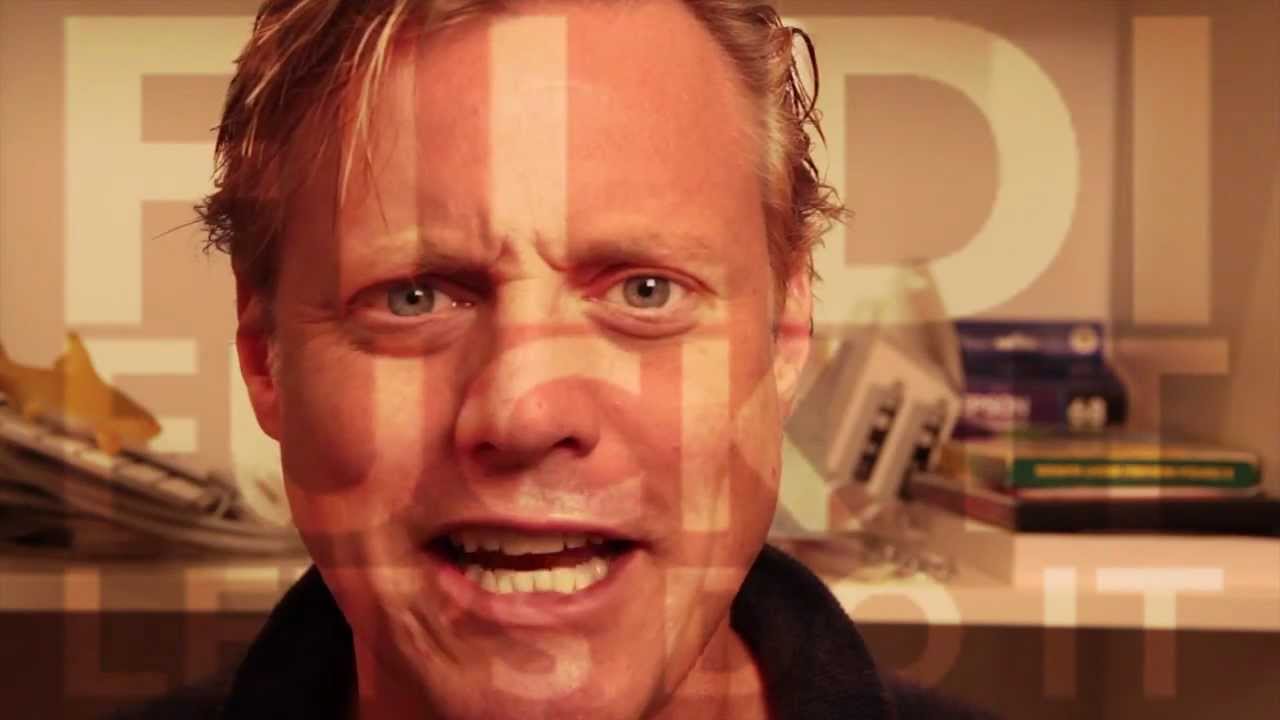
Three and a half minutes of a man whispering an invocation against quitting. Mostly arrives by accident, on the eve of a project the viewer has already half-decided to abandon.
In its first ten months on YouTube, the video collected more than four million views and three thousand comments, according to Know Your Meme's archive of his work. Most of the comments say a version of the same thing. I am about to start a new project. I am about to start a degree. I am about to start writing again. The video did not announce itself to the people who needed it. They were doing something else when it appeared. They watched the whole thing. They saved it. They came back to it on the morning of the project they were afraid of.
If you searched the words how to start a creative project, you would not find this video. You would find a thousand productivity tutorials, none of which contain a man in a sweater whispering an invocation against giving up. The recommendation engine, sometimes, gets there first.
A Travel Diary That Is Really About Saying Yes
The third one is more famous than either, and yet still mostly arrives by accident. In 2012, Casey Neistat was given a budget by Nike to make a third short film for their FuelBand campaign. He spent it on plane tickets. He and his editor Max Joseph went to JFK, looked at the departures board, and took the next outgoing flight. They did this for ten days, around the world, until the money ran out. They cut the footage into a three-minute piece called Make It Count. It does not, anywhere, mention the FuelBand. Fast Company called it going rogue. Nike called it the most successful commercial they had run that year.

Thirty-three million views, fourteen years on. It runs in a hundred classroom slideshows about creativity. It is not a video most people search for. It is the video that arrives on the night you are sitting in a kitchen wondering whether to go.
The video has thirty-three million views as of last year, according to Wikipedia's running tally. It runs in a hundred classroom slideshows about creativity. It is not the kind of video you would search for if you were trying to figure out whether to take a trip. It is the kind of video that arrives, on autoplay, on the night you are already sitting in a kitchen wondering whether to take a trip, and that ends with you having taken it.
The recommendation engine is not your friend. But every now and then, by accident, it knows what your friend would have sent you.
What the Researchers Call This
The 2025 Antwerp interview study put it carefully. People described uncovering an interest they did not know they had. People described a song from years ago surfacing at the right time and feeling, in their own phrasing, like a small miracle. People described being shown an idea, an artist, an essay, a stranger, that arrived without being asked for and stayed in their life. The participant the researchers labeled P11 said it the most plainly, talking about Spotify but in a sentence that scales to YouTube without any work at all: Song radio has helped me discover so many bands... now we even go to new wave parties.
A 2024 paper by Denis Kotkov and colleagues, presented at the ACM CHIIR conference, surveyed two thousand and two responses across three hundred and ninety-seven users of an article recommendation system. The paper is called The Dark Matter of Serendipity in Recommender Systems. The finding the researchers seem most haunted by is this: the conventional academic definitions of serendipity missed most of the moments their users actually described as serendipitous. The thing the platforms are measuring is not really the thing the viewer experiences. The dark matter, in their phrasing, is everything the platforms cannot see.
What both papers are circling, in their different vocabularies, is the same thing. The recommendation system is built around a very narrow definition of a good match. The users have a much warmer one. The platforms know how to optimize the narrow one. The wide one happens by accident, when it happens, and the user almost always remembers it.
Three Rabbit Holes, Not Two
The platform is not measuring serendipity. The platform is measuring watch time. The fact that it occasionally hands you a video you would have paid to be sent, on a night when no one knew you needed it, is, from the platform's perspective, a side effect of accuracy and luck. The user does not experience the same event the same way at all. The user calls a friend the next morning. The user remembers the video on a hard evening eight years later. The user describes it, in clumsy words, as the time the algorithm got something exactly right.
The Closing Reframe
Ethan named two rabbit holes. The passive one is real. The intentional one is real. The third one is real too, and there is no honest column on YouTube that can pretend it does not happen. Most nights the recommendation engine is a slot machine. Some nights it is a question, and you arrive holding the answer. And every now and then, on the night that matters, it is a stranger who, for reasons no one can fully explain, has been holding onto a video for fifty-seven years and has been waiting for you to be the kind of tired you are tonight.
The defense of the rabbit hole - and Ethan is right that it mostly does not deserve a defense - is the small percentage of evenings the system gets you exactly right. Tonight it might not. Most nights it will not. But the next time it does, take the video. Save it. Watch it twice. The recommendation engine is not your friend. By accident, sometimes, it knows what your friend would have sent you.
Eleven o'clock at night. The kitchen is dark except for the laptop. The cardigan is still here. You have not closed the tab.
Join the conversation