Nursing guide
YouTube for Nurses: NCLEX Prep, Pharmacology, and Clinical Learning in 2026
YouTube has become one of the most powerful free resources in nursing education - from NCLEX prep and drug class reviews to bedside clinical skills and CE content. The challenge is not finding the videos. It is building a study system that holds up through shift work, exam season, and clinical rotations.
Picture this: three weeks ago you watched a SimpleNursing video that walked through beta-blocker side effects in exactly the right way - the mnemonic clicked, it finally made sense. Now you are sitting down to study cardiovascular pharm before your next clinical and you cannot find it. You scroll your watch history for 15 minutes. You try YouTube search: "beta blockers nursing" returns 200 results. You open six tabs, none of them are the right one. You give up and start from scratch with a less helpful video. That 15 minutes is gone, and so is the specific explanation that finally worked for you. This happens to nursing students every single day - not because they are disorganized, but because YouTube is not designed to hold your study library together.
Why YouTube Has Become Essential for Nursing Education
There are now more than 4 million registered nurses employed in the United States, and nursing education has a heavy visual learning culture baked into it from day one. Anatomy diagrams, dosage calculation walkthroughs, IV insertion technique, the cascade of pathophysiology - these are things you understand faster when you can see them demonstrated rather than read about them. YouTube delivers that at no cost, on demand, across every device a nursing student owns.
A 2024 survey published in PMC found that 91.8% of healthcare students use YouTube as a learning tool for medical education. That is not a marginal adoption number - it means YouTube has effectively become part of the standard curriculum, even when it is not formally assigned. Nursing students use it to supplement lectures they did not fully understand, to see procedures demonstrated before their first clinical, and to find alternative explanations for concepts that did not land the first time around.
During shifts, practicing nurses use YouTube differently: quick reference for a procedure they have not performed in months, a refresher on a drug interaction before administering an unfamiliar medication, or a short CE module in between patients. The platform has become a clinical support tool, not just a study resource. And with YouTube Health's verified badge system for licensed healthcare professionals, it is increasingly possible to identify content from credentialed sources rather than relying on anonymous upload quality.

The Best YouTube Channels for Nurses and Nursing Students
Quality-vetted for 2026.
SimpleNursing (Mike Linares, RN)
SimpleNursing has become one of the most-used NCLEX prep resources on YouTube, having helped over 1 million nursing students. Mike Linares uses animated visuals and a mnemonic-heavy teaching style that makes pharmacology and pathophysiology memorable rather than just technically accurate. The channel is especially strong for drug class overviews - instead of memorizing 50 individual drugs, you learn the patterns that apply across an entire class. If you are preparing for NCLEX or struggling with pharm in nursing school, SimpleNursing is the channel most students recommend starting with.
RegisteredNurseRN (Nurse Sarah, BSN RN)
With 1.91 million subscribers, RegisteredNurseRN is the largest nurse-run channel on YouTube. Nurse Sarah covers NCLEX content reviews, nursing skills demonstrations, and clinical reasoning - and ends most videos with quiz questions that reinforce retention. The channel is particularly strong for students who learn by testing themselves immediately after watching, and the production quality is high enough to use as primary study material rather than just a supplement.
Level Up RN (Cathy Parkes)
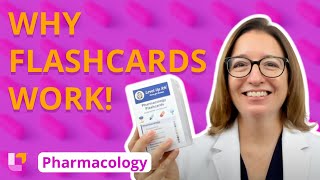
Level Up RN pairs polished, well-structured video content with a physical flashcard system, which makes it the go-to channel for students who want visual reinforcement that bridges into active recall practice. Cathy Parkes covers pharmacology, med-surg, mental health, and clinical reasoning with the kind of organized precision that maps well onto how the NCLEX actually tests you. The videos are designed to be rewatched - each one is dense with information and works well at 1.25x once you have seen it once.
Specialty channels
Beyond the broad NCLEX-prep channels, YouTube has strong specialty content for ICU (ICU Advantage, Critical Care Academy), emergency nursing (ERCast, ACEP), labor and delivery, NICU, and perioperative nursing. Once you are past boards and working in a specialty, these channels become your primary continuing education feed.

How to Use YouTube for NCLEX Prep: A Study System
Structure beats marathon watching.
The national first-attempt NCLEX pass rate in 2024 was 73.3% - meaning roughly one in four candidates does not pass on the first try. Students who build a structured video-based study system tend to do significantly better, not because YouTube is magic but because structured review drives retention in a way that passive watching does not.
Build playlists by NCLEX category, not by channel
The most common mistake is saving videos by who made them. Instead, organize by how the NCLEX is structured. Create a playlist called "Management of Care," another called "Pharmacological Therapies," another for "Safety and Infection Control." Pull the best videos from SimpleNursing, Level Up RN, and RegisteredNurseRN into those topic playlists rather than keeping everything siloed by channel. When it is time to study cardiac pharmacology, your playlist for that topic has the three best videos on it - not scattered across three different channels.
Use YouTube Chapters and playback speed strategically
Most well-produced nursing education videos on YouTube now include Chapters in the description - timestamps that let you jump directly to a specific drug class, condition, or concept without watching from the beginning. This is essential for review sessions where you know the material at a high level and need to drill one specific section. For lecture-style content, 1.25x to 1.5x speed works well once you have viewed it once. Drop back to 1x for clinical demonstrations - you need to see the actual technique at normal pace.
Pair watching with practice questions immediately
The research on active recall is unambiguous: watching alone does not build the retrieval pathways that NCLEX requires. The most effective YouTube study workflow is a 20-minute video segment followed immediately by 10-15 practice questions on the same topic. RegisteredNurseRN makes this easy because quiz questions appear at the end of most videos. For other channels, keep a question bank open in a parallel tab and test yourself on what you just watched before moving on.
The 2026 Next Gen NCLEX changes
The Next Generation NCLEX format, which moved to clinical judgment as its primary focus, has changed what good NCLEX prep looks like. Videos that simply review facts are less useful than videos that walk through clinical decision-making scenarios. Look for content that uses case study formats or "here is the patient situation - what do you do and why" framing. SimpleNursing and Level Up RN have both updated their content to address the Next Gen format directly.

NCLEX-RN question distribution by topic
Source: NCSBN NCLEX-RN Test Plan (midpoint estimates). Management of Care and Pharmacological Therapies together account for roughly one third of all questions - know where to focus your study hours.
Mastering Pharmacology on YouTube
Drug class approach beats memorization.
Pharmacological Therapies accounts for 10-16% of NCLEX questions depending on how the exam is weighted for a given candidate - and it is consistently the category nursing students feel least prepared for. The reason is the approach: most students try to memorize individual drug facts, which is both exhausting and ineffective for exam-level application questions. The YouTube channels that actually work for pharm teach by drug class instead.
When you understand that all beta-blockers share a predictable side effect and contraindication profile - bradycardia, hypotension, masking of hypoglycemia in diabetic patients, not for asthma - you can apply that knowledge to any beta-blocker on the exam regardless of whether you have seen that specific drug before. SimpleNursing's animated approach builds this class-level understanding using memorable mnemonics. Level Up RN reinforces it with visual flashcard formats that make active recall feel concrete rather than abstract.
A practical pharmacology YouTube workflow: start each drug class with a SimpleNursing animated overview (typically 10-20 minutes), then follow with a Level Up RN flashcard video for the same class to reinforce through a different visual format, then close the session with 15-20 NCLEX-style questions. Do not attempt to cover more than two or three drug classes in a single study session - spaced repetition is more effective than a single marathon session.
YouTube video library: hours per nursing topic
Source: SimpleNursing + Level Up RN channel catalogs. Hours represent total available curated content per topic area.
YouTube for Practicing Nurses: Beyond the NCLEX
Once you are licensed and working, YouTube shifts from exam prep to clinical reference and continuing education. The use cases change but the value does not.
Clinical procedure reference during practice
Nurses regularly encounter procedures they have not performed in months or have only done a few times. A quick YouTube refresher on central line dressing changes, Foley catheter insertion technique, or wound VAC application is faster and often more practically useful than reading a policy document. The key is having those videos saved and tagged so you can find them instantly - not searching from scratch while a patient is waiting.
Continuing education and CE credit resources
Several channels provide content aligned with nursing CE requirements. While YouTube videos alone do not grant CE credit, many nursing CE platforms embed or reference YouTube content, and watching structured clinical content on the platform supports the knowledge that CE exams test. For nurses seeking formal CE credit, the content knowledge often comes from YouTube even when the certification comes from a formal provider.
Specialty channels for ICU, ED, NICU, and perioperative nursing
Once you are working in a specialty, the broad NCLEX channels become less relevant. Critical care nurses follow channels like ICU Advantage and Critical Care Academy for ventilator management, hemodynamic monitoring, and CRRT. Emergency nurses follow channels covering trauma assessment and rapid pharmacology. Labor and delivery nurses follow specialty maternal-newborn content that goes well beyond what the NCLEX prep channels cover. The channel landscape for specialty nursing is rich and growing.
Career development: certifications and specialties
CCRN prep, CEN prep, and other specialty certification content is well-represented on YouTube. Nurses who are preparing for specialty certifications use the same study-system approach that works for NCLEX - organized playlists by exam domain, paired with active recall through practice questions. The same organizational principles that served you in nursing school continue to serve you every time you pursue a new credential.
YouTube Health: What the Platform Is Doing for Healthcare
YouTube has invested significantly in credibility infrastructure for health content. The YouTube Health verified badge is now available to licensed healthcare professionals who apply and meet the platform's verification criteria. This badge appears on channel pages and signals that the creator's credentials have been reviewed - which matters when you are trying to distinguish evidence-based clinical content from well-produced but unverified health claims.
Health source information panels appear on videos covering medical topics, providing context about the topic from established health organizations. For nursing students and practicing nurses, these panels help identify when a video is well-sourced versus when it is an individual's interpretation without clinical grounding. It is not a perfect system, but it is a meaningful credibility signal that did not exist a few years ago.
When selecting YouTube channels for clinical learning, look for: licensed credentials mentioned by name in the channel About section, Health verification badges where applicable, content that cites specific clinical guidelines or references, and comment sections where clinical inaccuracies are corrected rather than ignored. Channels that engage seriously with corrections tend to produce more accurate content overall.

How to Organize Your Nursing YouTube Library
From Watch Later chaos to a clinical study system.
Watch Later does not work for nursing study. It is an unsorted pile. If you saved 200 videos over the course of a semester, Watch Later gives you a reverse-chronological list with no way to filter by topic, add notes, or mark timestamps. The pharmacology video you need for Tuesday's exam is buried under a skin-care routine someone shared in your group chat and four meal-prep videos you added on autopilot.
The practical alternative is topic-based organization with three additional layers: notes explaining why a video matters, timestamps pointing to the specific moment you need, and search across the whole library so you can find something in seconds rather than minutes.
Build shelves that match how you actually study
A nursing student library might look like: "Pharm - Cardiovascular," "Pharm - CNS," "Med-Surg - Respiratory," "NCLEX - Priority/Delegation," "Clinical Skills," and "Mental Health." Each shelf holds 5-15 videos on that specific topic, saved from whichever channels produced the best explanation. When you sit down for a pharmacology study session, you open the right shelf and everything relevant is already there - curated by you, for you, not by the algorithm for engagement.
Timestamp the moments that actually matter
A Level Up RN video on cardiac medications might be 22 minutes long. The specific breakdown of beta-blockers you need for your exam prep might be at 6:45. Saving a bookmark at 6:45 with a note like "beta-blocker: bradycardia, hypotension, hold if HR below 60" means that when you return to this video three weeks from now, you jump directly to the relevant moment rather than scrubbing through the whole thing. That habit - saving specific timestamps with specific notes - is what turns a video collection into a clinical reference library.
YouTube Bookmark Pro for nursing study libraries
YouTube Bookmark Pro lets you save videos with notes and timestamps, organize by topic shelf, and search across your entire library from a side panel that stays open while you watch. The free Library tier covers everything a nursing student needs: save to a named shelf, add a study note, mark the timestamp of the specific content you need. Pro adds cloud sync across devices, which matters when you study on a laptop at home and a tablet in the hospital library. There are no limits on how many shelves you can create or how many videos you can save.



Start for free
Build a nursing study library that actually works
Save pharmacology videos with timestamps, organize by NCLEX topic, and find any video in seconds - from any device. The Library is free forever.
Frequently asked questions
Is YouTube good for NCLEX prep?
Yes - YouTube is one of the most effective free resources for NCLEX prep when used with a structured system. Channels like SimpleNursing, Level Up RN, and RegisteredNurseRN produce content specifically designed around NCLEX question categories and the clinical judgment focus of the Next Gen format. The key is organizing videos by NCLEX topic category rather than by channel, combining video review with immediate practice questions, and saving timestamps for specific concepts you need to revisit. Passive watching without active recall does not build exam-ready retrieval - but a deliberate watch-then-test workflow does.
What are the best YouTube channels for nursing students?
The most consistently recommended channels are SimpleNursing (animated pharmacology and NCLEX focus, 1M+ nursing students served), RegisteredNurseRN (1.91M subscribers, clinical skills plus NCLEX reviews with built-in quiz questions), and Level Up RN (Cathy Parkes, flashcard-integrated content with strong clinical reasoning coverage). For specialty content, ICU Advantage covers critical care and ERCast covers emergency nursing. Each channel has a different teaching style - most nursing students end up using two or three in combination rather than relying on a single source.
Can nurses get CE credit from YouTube?
YouTube videos alone do not award CE credit - continuing education credit requires formal certification through an accredited CE provider. However, many nurses use YouTube content to build the clinical knowledge they then demonstrate on CE assessments. Some CE platforms reference or embed YouTube content as part of their modules. The practical workflow for busy nurses is to use YouTube for knowledge acquisition and review, then complete formal CE assessments through accredited platforms like Nurse.com, CE4Nurses, or hospital-provided CE systems.
How do I find specific clinical procedure videos on YouTube?
YouTube search works well for initial discovery, but the problem is re-finding videos you have already watched. For procedures you reference regularly - IV insertion technique, wound care, catheter care - save them immediately with a descriptive note the first time you find a good explanation. YouTube Bookmark Pro lets you save with custom notes and a shelf label like "Clinical Skills" so the video is retrievable in seconds when you need it at the bedside or before a skills check. The free Library tier handles all of this without requiring an account upgrade.
How do I organize nursing videos on YouTube so I don't lose them?
Watch Later and browser bookmarks do not hold up over a full semester of nursing school. The most effective system is: create topic shelves (Pharm - Cardiovascular, NCLEX Priority Questions, Clinical Skills, etc.), save videos to the relevant shelf immediately as you find them, add a one-sentence note explaining what is useful about this specific video, and mark the timestamp of the exact moment you need to return to. YouTube Bookmark Pro provides all of this from a side panel that stays open while you watch. The free Library tier is unlimited and covers every use case a nursing student or practicing nurse needs.
Sources
- PMC - Healthcare students YouTube learning survey (91.8%), 2024
- U.S. Bureau of Labor Statistics - Registered Nurses employment data, 2026
- YouTube Official Blog - YouTube Health features for licensed healthcare professionals
- Nightingale College - Nursing shortage by state, 2026
- SimpleNursing - NCLEX pass rate data and practice question resources