
YouTube Let You Clone Yourself in April. The Law Requiring You to Disclose That Took Effect Yesterday.

April 8 and June 9 landed on the same calendar without knowing about each other. On April 8, YouTube launched personal avatar generation for Shorts globally - a feature that lets you scan your face once, record your voice once, and then generate clips of yourself saying things you never actually said. On June 9, New York's Synthetic Performer Disclosure Law took effect. It requires advertisers to disclose when AI-generated synthetic performers appear in commercial ads. Two things happening, sort of in the same space. Not quite overlapping. That non-overlap is the interesting part.
One Selfie, Then You Never Have to Show Up Again
The YouTube personal avatar feature is genuinely strange to think about once you slow down. You take a live selfie - a single biometric capture of your face. You read some prompts aloud. YouTube's Veo models take that data and build a version of you that can be summoned by text prompt. Describe what you want to say, and the avatar says it. Up to 8 seconds per generated clip, chainable into longer Shorts. The avatar is photorealistic. It sounds like you. According to YouTube's own support documentation, it's available globally for creators 18 and over - except in Europe.
There's one detail in the support docs that deserves more attention than it's gotten: "Deleting your avatar will not automatically delete the videos you published or their remixes." The body of work you build using your AI likeness outlives the biometric consent that created it. Delete the source material, keep the outputs. That's the kind of sentence that will matter a lot more in three years than it does today.
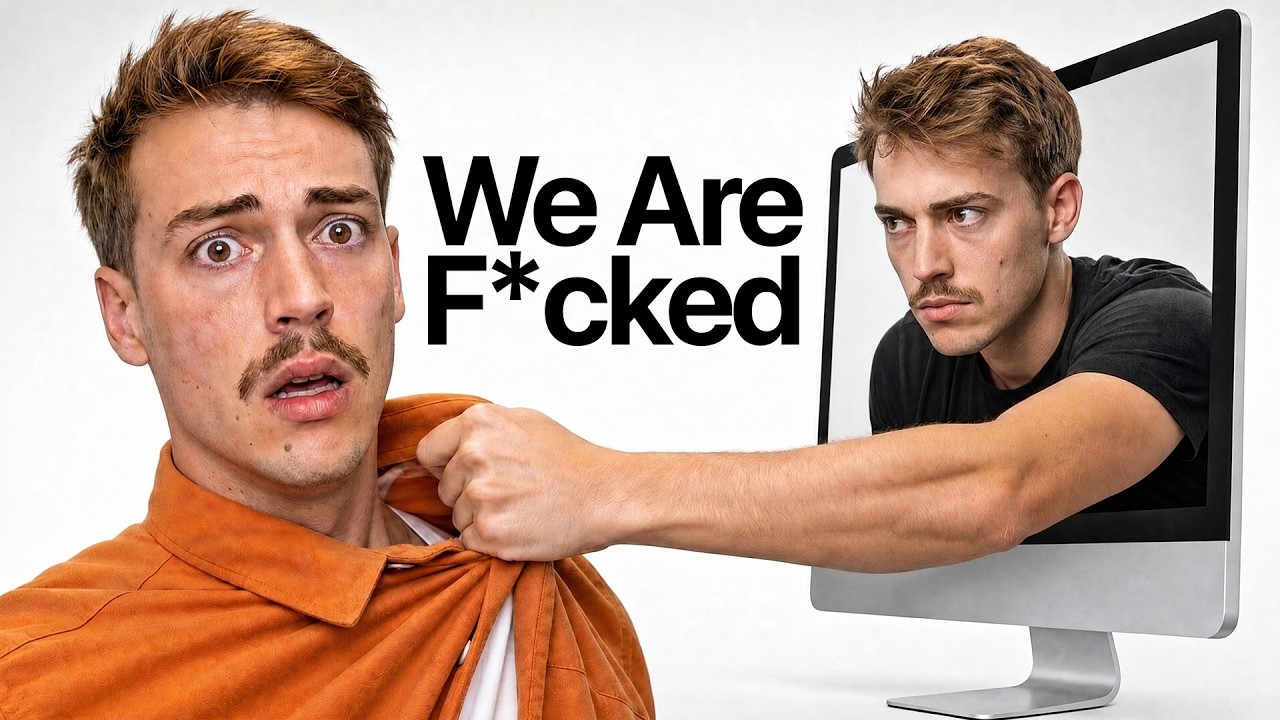
This is not Dan Kieft. It is also Dan Kieft. That's the whole point.
New York's New Law, Explained in Two Sentences
New York's Synthetic Performer Disclosure Law (S.8420-A/A.8887-B) was signed December 11, 2025, and took effect June 9, 2026. It requires "conspicuous disclosure" whenever commercial advertisements feature AI-generated synthetic performers. First offense: $1,000. Subsequent violations: $5,000 each. The law is modeled on the FTC's "clear and conspicuous" standard - meaning the disclosure has to be noticeable, legible, and understandable to a reasonable person watching the ad, not buried in a caption or a metadata field nobody reads.
That sounds straightforward. It isn't, quite, because the law contains a definitional choice that changes everything for creators using YouTube's avatar feature. McDermott Will and Emery's breakdown is the clearest explanation of the gap I've found.
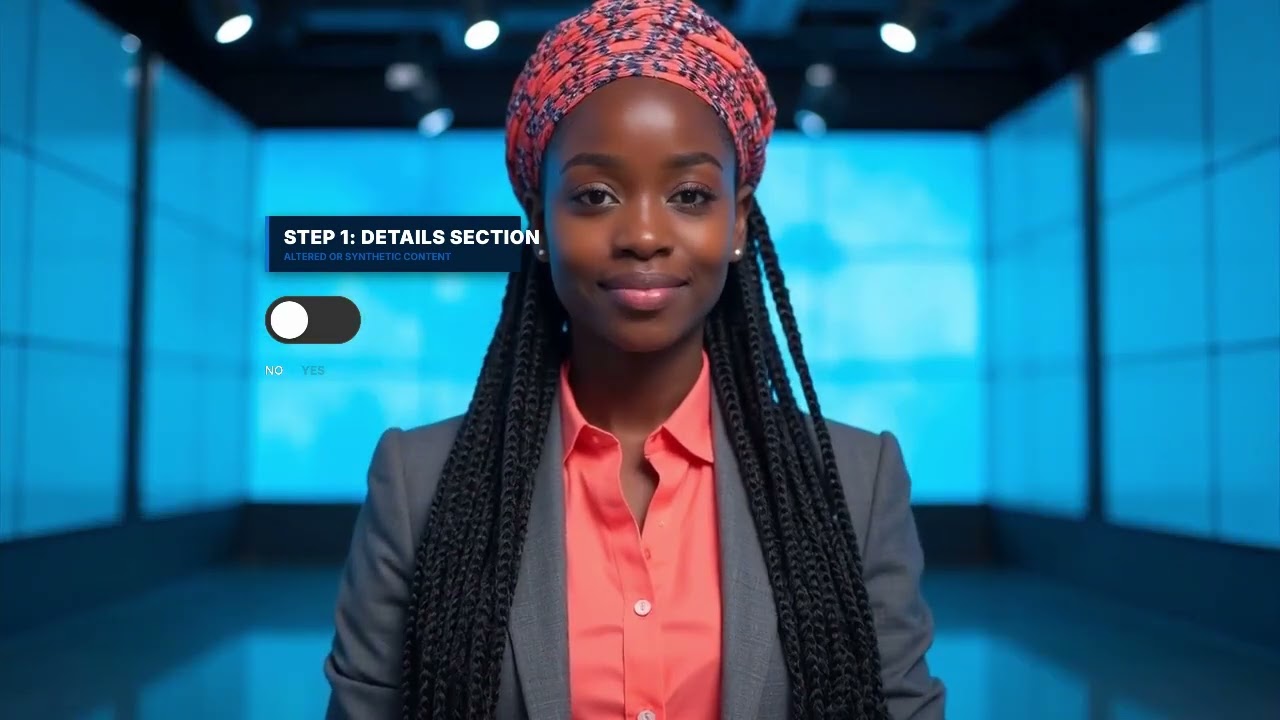
The rules are real. Figuring out which ones apply to you is the work.
The Part Nobody Expected - Creator Avatars Aren't "Synthetic Performers"
Here's the counterintuitive finding. The New York law defines a "synthetic performer" as an AI-generated human who does not represent an identifiable real person. A brand using a completely fictional AI spokesperson - someone who was generated, not born - falls squarely under this law. That person has to be disclosed in any commercial ad they appear in.
A creator's own avatar is something different. Because it looks like you, sounds like you, and was made from biometric data of you, it legally classifies as a "digital replica" of a real, identifiable person. That's a different category, covered by publicity rights and privacy law rather than this specific disclosure statute. You, in other words, are exempt from the synthetic performer rule precisely because your avatar is too recognizably you to be a synthetic performer.
AI-generated human that looks like no real person - fully fictional.
AI copy of an identifiable real person - based on someone who exists.
AI clone of yourself, made with your own biometric consent.
There's one exception worth watching. If a creator uses their avatar to portray a fictional character in a sponsored Short - not as themselves, but as a made-up character - that fictional persona might trigger the law. The avatar playing you is fine. The avatar playing a character who happens to look like you, in a commercial context, is a grayer area. Nobody has tested that specific case yet.
"The law draws the line at 'non-identifiable.' In doing so, it's telling you that your avatar is legally you. Whether the people watching your Shorts agree is a different question."
The Disclosure Gap Between Machine-Readable and Human-Visible
YouTube's technical disclosure stack for AI-generated content has two layers. SynthID, Google's digital watermark, is embedded invisibly in the file itself. C2PA metadata - an industry standard for content provenance - is also embedded in the file. Both are machine-readable. Neither is visible to a human watching the video.
YouTube did something more visible on May 27, 2026: it moved its AI-generated content label to the front of the screen, instead of leaving it buried in the description. So there is now a visible label - but it exists on YouTube's platform. When that avatar video gets served as a YouTube ad on a third-party website, or embedded somewhere, the platform label doesn't travel with it. The file travels. The watermark travels. The label stays behind.
Visible to humans →
The New York law requires "conspicuous" disclosure in commercial contexts. Machine watermarks are useful for content provenance and fact-checking. They are not the same thing as a disclosure a viewer can read while watching an ad. That gap - between what the file carries and what a human sees - is where compliance questions actually live.
The Europe Signal
YouTube launched the avatar feature globally. Except Europe. The company gave no specific reason in its announcement. But Europe has the EU AI Act, the GDPR, and a regulatory environment where biometric data collection - face and voice recording - faces substantially stricter standards than it does in the US. Single-scan biometric capture for AI generation is exactly the kind of thing that triggers heightened scrutiny under those frameworks.
When a technology company draws a geographic line around a single feature at launch, they're publishing their internal regulatory risk assessment. The EU exclusion is that assessment. California and additional EU measures are expected to follow in August 2026, which suggests this story isn't done narrowing.
The interesting question isn't whether this law covers YouTube's avatar feature right now. For most creators making regular Shorts with their own avatars, it doesn't apply. The question is what "disclosure" actually means as these tools become normal. The machine watermark exists. The platform label exists. But neither of them tells a viewer watching a Short that the face and voice they're looking at is a generated version of a real person who wasn't in the room when the video was made. That conversation hasn't really started yet. June 9 was just one law. The bigger one is still being written.
The disclosure lives in the metadata. The audience lives in the video.
Join the conversation