
YouTube Finally Has a Real Collaboration Feature. The Revenue Split Is Still a Handshake Deal.

Before this feature existed, collaborating on YouTube meant one of three things. You uploaded to one channel and mentioned the other creator in the description - hoping viewers cared enough to look. You did a split-screen video and argued over whose subscriber base it actually lived on. Or you made two separate videos, each pointing at the other, and watched the funnel lose 90% of viewers at every handoff.
None of those gave the audience a direct path. They had to do work to find your collaborator. Most of them didn't.
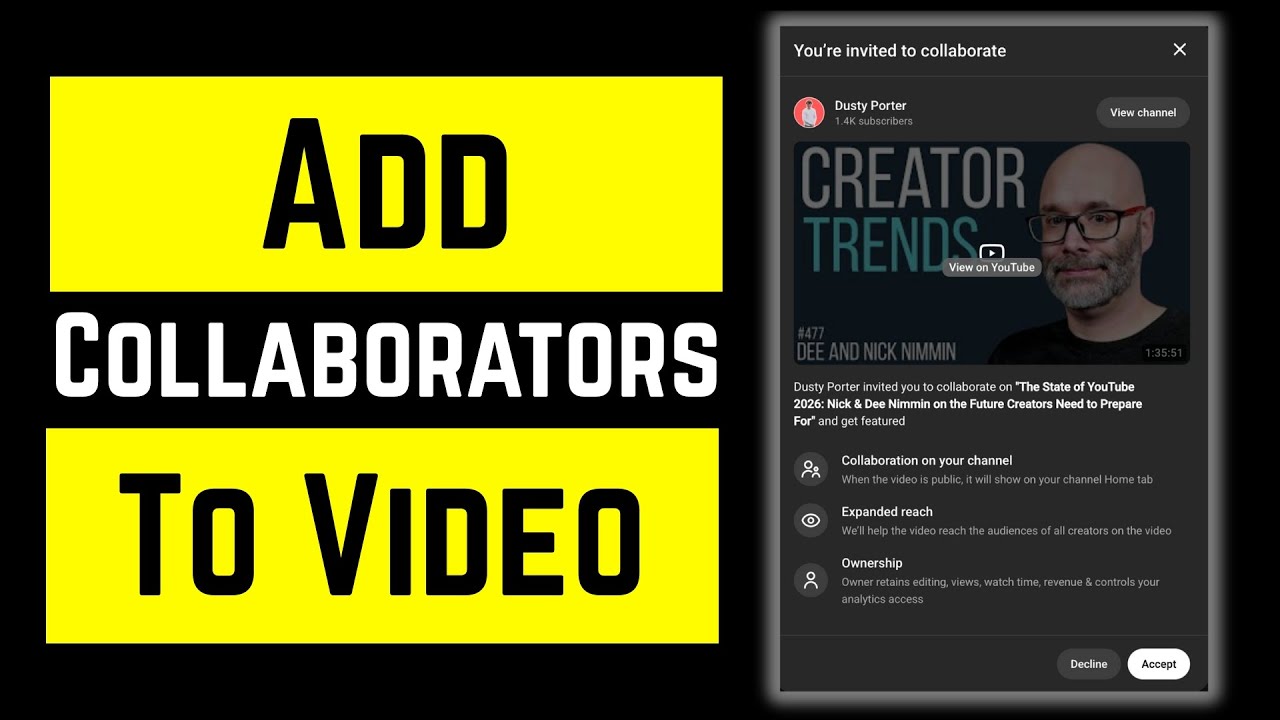
YouTube's new Collaboration feature changes exactly one thing: the path. Up to five creator names now appear directly below the video player, each with their own Subscribe button. The viewer doesn't have to leave the page. They don't have to search. They don't have to remember a username. The Subscribe button is right there.
That's the whole product change. The money situation - who gets paid, how much, what the split looks like - is exactly where it was before. YouTube's official guidance is unambiguous: "The channel where the collaboration video was posted receives the earned revenue. Revenue sharing does not occur between collaborators." Any financial arrangement between collaborating creators is handled entirely outside YouTube, the same way it always was.
What the feature actually does
The mechanics are straightforward. The hosting channel invites collaborators via YouTube Studio. Each invited creator receives a notification and must accept before their name appears publicly. Once they accept, their channel name, avatar, and a Subscribe button display directly below the video player - visible on desktop, mobile, and TV screens.
The same video then gets recommended to the audiences of both (or all five) participating channels. YouTube explicitly says it "aims to recommend videos to audiences of both collaborators and the posting channel." The important caveat, which YouTube includes in its own help documentation: "you may not notice changes in search or recommendations at first." That's not pessimism - it's YouTube being honest that the algorithmic lift isn't automatic or guaranteed.
Content type coverage is broad: long-form videos, YouTube Shorts, YouTube Premieres, and archived livestreams all support collaborators. The one exclusion is active live streams - you can't add collaborators to a stream while it's happening, only after it's been archived.
Analytics: the hosting channel retains full access to performance data. Collaborators can view some basic metrics through their own YouTube Studio - primarily as confirmation that the video exists and is performing, not as a full analytics dashboard. Revenue figures are not shared with collaborators at any tier. That combination - visibility into views but not into money - is a deliberate design choice.

The feature in practice: what's in and what's not
The two lists are intentional, not incidental. YouTube built a feature that standardizes how collaboration is displayed and discovered - the viewer-facing piece. It did not build a feature that standardizes how collaboration is compensated - the creator-facing piece. Those two categories of problem are genuinely different, and YouTube chose to solve one of them.
The Subscribe button is the whole point
Here's the honest read on what changed. Before the Collaboration feature, a viewer watching a collab video had to complete a multi-step process to subscribe to the other creator: notice the mention, remember the channel name, open a new tab, search for the channel, find the right one among similarly-named results, click Subscribe. Most viewers didn't. Most collab traffic stayed on the host channel.
That friction reduction is real, and it genuinely helps collaborators. A 10,000-subscriber creator tagged by a 500,000-subscriber channel now converts a meaningful fraction of that audience without requiring any viewer effort. That's not nothing. In the old system, that same collaboration would have generated a temporary views bump and very little lasting subscriber growth on the smaller channel.
But here's what that Subscribe button also does: it keeps the entire subscription transaction inside YouTube. Before, a creator might tell their audience "find me on Instagram" or "I'm on TikTok too." The new Collaboration feature creates a strong incentive to handle collab visibility through YouTube, not through off-platform mentions. The subscriber relationship stays in the ecosystem. YouTube doesn't need a revenue cut from a button click - they get the subscription data, the algorithm signal, and the retained audience attention.
The Subscribe button converts a shoutout into a subscription path. That's good for the collaborator. That's also exactly what YouTube needed it to do.
Who benefits most - and least
The asymmetry in this feature is significant. The hosting channel keeps all revenue and all control. The collaborating channels get Subscribe buttons and possible audience exposure, with no guaranteed algorithmic boost and no financial upside beyond whatever private arrangement they've made beforehand.
That makes the feature most useful in three specific scenarios:
- Smaller creator tagged by a larger one. The Subscribe button matters a lot more at 8,000 subscribers than at 800,000. This is where the discovery friction reduction has genuine economic value.
- Equal-size creators doing genuine creative collabs. Both channels get audience overlap and the Subscribe button. Neither channel has a financial grievance because neither expected revenue from the other's upload anyway.
- Music and entertainment releases. Royalties and licensing are already handled by labels, publishers, and distributors entirely outside YouTube. The Collaboration feature adds visual credit and discovery without disrupting the existing financial infrastructure.
The scenario where it matters least: two mid-size business-focused creators who were previously splitting channel revenue via a separate contract. For them, the feature actually creates a potential awkwardness - YouTube now has a very visible, clean way to attribute a video to multiple creators, but has built no mechanism for the underlying financial arrangement to follow that same visible structure.

The platform-first design pattern
This is not a criticism of the feature - it's a pattern recognition exercise. YouTube has a consistent design logic: it builds features that expand what happens inside its ecosystem, and it leaves creator-to-creator economic arrangements as "something you handle separately." The same logic shows up in Creator Partnerships (zero commission means the payment flows through Google Ads instead), in Ask YouTube (citations but no monetization for cited creators), and now in Collaboration (Subscribe buttons but no revenue routing).
The feature solves the discovery problem because discovery is a platform problem. Discovery friction hurts YouTube - fewer subscriptions, less audience retention, weaker algorithm signals. The feature does not solve the compensation problem because compensation is a creator-to-creator problem. YouTube has no incentive to build a payment-splitting infrastructure for creators who could just wire each other money, and some incentive not to - payment routing between parties attracts regulatory scrutiny and platform liability that YouTube has carefully avoided.
How to use it well
The feature is legitimately useful if you go in with the right expectations. Here's what actually works:
- Use it for creative collaborations where your audiences genuinely overlap. The algorithmic recommendation signal is stronger when the viewer history is similar.
- Invite collaborators on both channels if possible - if you're hosting a video, offer to be tagged as a collaborator on the other creator's related content. The Subscribe button is mutual when both videos exist.
- Don't expect the algorithm to do the heavy lifting. YouTube's own documentation says you may not notice changes at first. The feature is a frictionless Subscribe path, not an instant audience expansion.
- For financial arrangements, treat this exactly as you would a brand deal: scope, compensation, and timeline in writing before anything goes into Studio.
The Collaboration feature is genuinely good infrastructure. It solves a real friction problem that existed for years. The caveat is just this: it solves YouTube's friction problem at the same time it solves yours. The Subscribe button keeps the audience inside the platform. The discovery recommendation keeps both channels spending time in YouTube Studio analyzing shared metrics. The revenue gap keeps financial negotiation off-platform, which is exactly where YouTube wants it to stay.
None of that makes the feature less useful. It just means the feature was designed to serve the platform's interests first - and happens to serve creator interests in the same motion. That's the best kind of YouTube feature, honestly. Use it. Just know what it's doing.
Join the conversation