
The Algorithm Used to Live in Your Pocket. Now It Sits on the Couch.

The TV in the living room used to belong to a network. Then it belonged to whoever held the remote. Then, for a long stretch in the 2010s, it sat quietly in a room nobody was really in - everyone was upstairs, in bed, on a phone, watching their own screen. The big television in the middle of the house became furniture. It became a thing that was on when guests came over and off when they left.
And then, sometime in the last two years, the house came back into the living room. Not because television came back. Because YouTube did.
This morning Ethan wrote about what happened to the screen. He covered the design transformation - that the platform now streams more than a billion hours of content a day on connected TVs globally, that Nielsen's most recent Media Distributor Gauge has YouTube holding more US television viewing than any single media company, that creators who built careers in vertical 9:16 are now being watched on 65-inch horizontal screens by families on a Saturday night. His piece is the case for redesigning. This piece is the case for noticing what the room itself has become.
Because something quiet has happened. The algorithm used to live in your pocket. Now it sits on the couch.
The Spectacle the Family Watches Together
On a Saturday night last winter I was at a friend's house and her two kids - seven and ten - were watching a video on the big TV. Their father was on the couch too, not watching, scrolling on his phone, but glancing up every minute or so. The video was about a hundred people locked in a room together for twenty-four hours competing for a hundred and fifty thousand dollars. It was loud. It was edited like a network reality show. The seven-year-old kept yelling at the screen. The father started watching. By the end of the video everyone in the room - including me, including the dog - had taken a side. We were all in.
I do not remember the network premiere of a show that made everyone in a room stop and pay attention like that. I am old enough to remember when a network premiere was even possible. The thing I was watching had no network. It had a creator. The creator had a thumbnail.

Six hundred million views. Mostly on televisions. The premiere nobody scheduled.
MrBeast is not the point of this column. He is the proof of it. The video above was uploaded in November 2021 and has been watched, conservatively, on every kind of screen there is. But the screen it lives on now - the one that pulled it up on a winter Saturday in my friend's living room - is the screen the network used to live on. The remote is still in the same place on the armrest. The couch is still in the same orientation. The room is still the room. The thing on the screen is what changed.
The family on the couch in 1998 watched whatever ABC put on at eight o'clock. The family on the couch in 2008 watched whatever they had paused on their DVR. The family on the couch tonight is watching a man dressed in a black t-shirt walking around a warehouse explaining the rules of a game he is paying somebody to lose.
The Numbers Make the Room Make Sense
Nielsen's April 2025 Media Distributor Gauge reported that YouTube held 12.4% of all US television viewing - more than any other single media company, including Disney (10.7%), Paramount (8.9%), NBCUniversal (8.2%), and Warner Bros. Discovery (6.7%). That is one platform outscoring entire networks - the whole umbrella of ABC, ESPN, FX, and Disney Channel combined - not by a margin of error, but by almost two full percentage points.
The other number that lives with me is from Stream TV Insider's report on YouTube's living-room growth: more than 400 million hours of podcasts watched each month on living room devices. Podcasts. The medium invented to be in your headphones, on a walk, alone. The medium whose entire shape was about being a private companion to a solitary listener. Now it is on the family TV, with the screen on, while somebody loads the dishwasher. Kurt Wilms, the YouTube senior director of product management who reported the figure, said it almost as an aside. "YouTube users are also watching more than 400 million hours of podcasts each month on living room devices." The aside is the column.
The Late-Night Talk Show That Does Not Air on a Network
Somewhere - in a kitchen, in a living room, on a Tuesday night, in a country that does not get late-night network television the way the US does - somebody is laughing at Sean Evans interviewing Conan O'Brien while eating chicken wings coated in increasingly painful hot sauces. The video below has been watched well past a hundred million times. The format is, in every structural sense, a late-night talk show - a desk, two chairs, a host with a clipboard, a famous guest, a running gag, an arc, a payoff. It just does not air on any network.

A talk-show episode that did not air on any network. It plays in living rooms anyway. The room knows what it is watching.
Sean Evans is, in the literal sense, someone you watch the way your parents watched David Letterman. You know the shape of his episodes. You know what kind of laugh you are going to get in the middle. You know the moment where the guest realizes the hot sauce has crossed a line, and you know the moment where the guest realizes Sean read the deep cut from the third paragraph of the obscure profile. The format is so confidently television that you can sit on a couch and watch it with somebody else in the room without needing to explain anything. It is just the talk show. It is just what is on.
The strangeness only becomes visible if you back up. Nobody bought this. Nobody pitched it to a network. The network did not greenlight it. It got eighteen seasons and a celebrity bench deeper than anything on broadcast TV because somebody pointed a camera at it and the couch came to watch. Then the couch grew larger - became a couch in millions of rooms. Then the couch became television.
The Reality Show That Is a Real Family
The third proof in this thesis is quieter than the first two. There is a creator named Kinigra Deon whose channel is mostly her family - her husband Reggie, their children, a Krown Family naming convention that turns each new addition into a brand event. The thumbnails have emojis. The titles describe drama. The videos run long. The cadence is familiar to anyone who watched reality television on cable in the early 2000s: an arc, a confessional, a season-long thread.
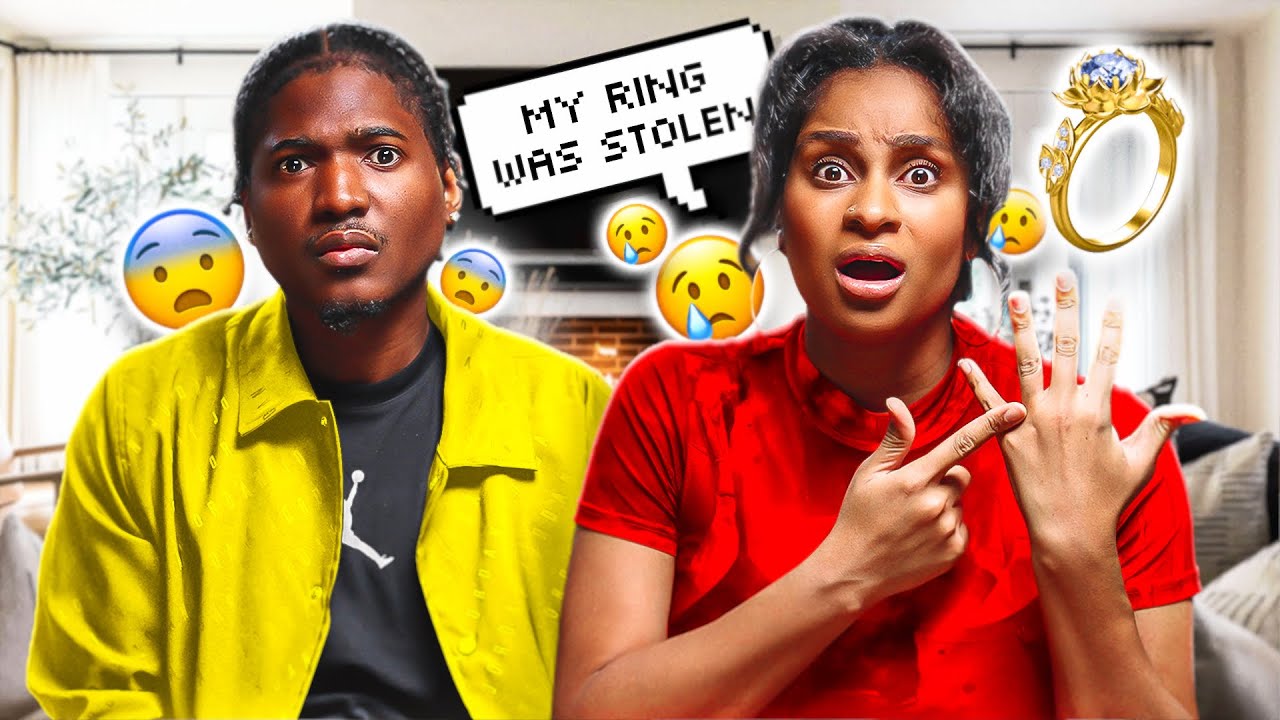
Reality TV in the room next door. Seventy percent of the audience is sitting on a couch.
The number that lives under the surface of her channel is the one Ethan cited this morning, the one Spotter reported Kinigra disclosed back in 2023: more than seventy percent of her viewers watch on connected TVs. Not phones. Not tablets. Couches.
The thing that is happening here is not new content. The Kardashians ran a long-form weekly reality show about a family for fourteen years. What is new is the broadcaster. Kinigra Deon did not get a deal with E! or Bravo. She did not film a pilot. She did not negotiate a placement on a network's Sunday-night lineup. She filmed her family with her phone and a couple of cameras, posted on YouTube, and the couches found her on their own. The discovery layer that used to be a programming executive is now an algorithm sitting next to that couch.
The family used to gather around the television. Then they each got a phone. Now they gather around the television again - but it is playing what each of them watched alone last night.
Two Ways the Same Video Plays
A creator who shipped one video last week did not ship one product. They shipped two. The first product plays at twelve inches from a viewer's face, on a screen the size of a hand, with a single set of eyes on it, with one person's full attention, with no one else in the room. The second product plays at eight feet from a viewer's face, on a screen the size of a wall, with two or three or five sets of eyes drifting in and out, with one remote being passed between hands, with conversation happening between scenes. The video is the same. The viewing is not.
| Dimension | Phone in bed | TV in living room |
|---|---|---|
| Distance from your face | 12 inches | 8 feet |
| Who else is in the room | Usually nobody | Two to five people |
| Session length | Short. Bedtime, train ride. | Long. The evening. |
| What happens when one ends | You tap. Or you stop. | The next one starts. Nobody moves. |
| Who picked it | You | Whoever has the remote. Often the room as a whole. |
| What the thumbnail does | It fits in your thumb's reach. | It fills the wall. It is now a billboard. |
What Changes When the Algorithm Has the Remote
The phone version of YouTube is solitary by construction. It is a screen the size of your palm. It is meant to be held, not displayed. Nothing about it suggests that anyone else has a say in what you watch next. You scroll. You tap. You leave. The algorithm is whispering, but it is whispering only to you.
The living-room version is not solitary. It is not even private. The next video that autoplays is being watched by everyone in the room, whether they agreed to or not. When the dog walks across the carpet and the seven-year-old yells, the autoplay just keeps rolling. The algorithm picked something, the room is now watching it, and the room did not get a vote.
That last sentence is the one I keep thinking about. The algorithm did not used to be in the room. It was in your bedroom or your pocket, behaving like a small companion, optimizing for the kind of thing you wanted alone on a Tuesday at nine PM. Now it is sitting between you and your partner on the couch on a Saturday, and the algorithm has the same instincts it had on the phone - keep this person watching - except the person is no longer one person. The person is the household.
I am not sure the algorithm knows that yet.
Ethan's Piece Was the Practical Half. This Is the Other Half.
Ethan wrote the part of this story that creators need to read. He covered the five new TV-specific features YouTube rolled out in October 2025 - the 50MB thumbnail limit, the AI upscaling, the immersive previews, the contextual search on TV, the shopping QR codes. He cited the YouTube product team's October 2025 announcement about the 45% year-over-year increase in channels earning six figures or more in revenue specifically from TV screen views. He wrote about the gap between what a phone-shaped thumbnail communicates and what a wall-shaped thumbnail does. He gave creators a practical instruction: open YouTube Studio, go to Analytics, look at the Reach tab, check the device-type filter, and if TV is already thirty percent or more, the room you are making content for is bigger than you have been treating it.
This piece is not that piece. This piece is for the rest of us. The people who do not run a channel. The people who are sitting on the couch with the remote, who arrived in the living room from a bedroom they used to watch YouTube in, and have not quite noticed that the move happened. The viewers, in other words.
The thing the algorithm did not know it was doing - by spending fifteen years optimizing for the phone in the bedroom - was preparing us for a moment when the family room would not feel empty anymore. We did not get television back. We got something stranger. We got a television that learned what each of us watched in the small hours and that now, gently, plays a version of it for everyone.
The Room Is the Story
I keep returning to the image of my friend's living room on that Saturday in winter. The dad is on his phone, half-watching. The seven-year-old is yelling at the screen because somebody in the warehouse just took a deal that the seven-year-old, with the moral clarity of a seven-year-old, considers a betrayal. The ten-year-old is quieter, more strategic, narrating to herself what she would do in the same situation. My friend is in the kitchen but listening. The dog is asleep.
None of them, individually, would have chosen that video. The seven-year-old likes Minecraft. The ten-year-old likes makeup tutorials. The dad does not really watch YouTube. My friend, when she watches alone, watches something quiet and Scandinavian. The video on the screen is none of those things. It is something the algorithm assembled out of the average of all of them, and what it picked is a person handing somebody one hundred and fifty thousand dollars to do a hard thing.
The remarkable part is that, having picked it, the algorithm picked correctly. The room - this specific, mismatched, distracted, mixed-age room - is watching together. The Saturday evening is happening. Nobody has gone upstairs to their own screen yet. The big television in the middle of the house is, somehow, doing the thing it was always built to do. It is being the room.
The algorithm used to live in your pocket. Now it sits on the couch. It has been sitting on the couch for a couple of years now and we have only just started to notice that this is what the couch looks like now. The TV in the living room - the one that nobody was using - has somebody on it. The somebody is, at any given moment, the average of everybody in the household after they each spent a week alone on their phones. And the next time somebody hands you the remote, what they are really handing you is a vote on what kind of household yours is going to be tonight.
It is a small thing to notice. The whole house is in the same room. The screen is on. The remote is on the armrest. The light is dimmed. The dog is asleep. Somebody is yelling at the screen and somebody else is half-laughing. This is not a feature announcement. This is just a Saturday. But somewhere along the way, the room came back. We were not quite there to see it happen. The algorithm was. The algorithm sat down beside us. It knows what we watch. It is, for now, picking gently.
Maybe tonight, before the next autoplay rolls, somebody in your room will look over and ask if everyone is still in. That is a question the algorithm cannot answer. It is one the couch can.
Join the conversation