
The One Famous Video. The Long Quiet Life After.
The curtain went up. The crowd screamed. The young man with the deep, deep voice felt the sound hit him like a wave that did not stop. He had been diagnosed with what was then called Asperger's at fifteen, but in the autumn of 2007, on the set of Jimmy Kimmel Live, he did not yet know what autistic hyperacusis was, only that it had just made him feel, in his own later words, crushed and like a ghost in my own body. The video that brought him there had been online for four months. It was called Chocolate Rain. It had a hundred million views in front of it that he could not yet see.
This morning Ethan wrote about Hype, YouTube's new amplification feature that gives small creators a hundred-and-fifty-fold scoring bonus over the big ones, to help them rise. He is right that the math is generous. He is right that the algorithm finds you cold and Hype requires you to already be warm. He is right that this is, in a small way, kinder than the way YouTube usually works.
There is something I want to put on the other side of that math.
The internet has always known how to make someone briefly famous. What it has never figured out is what to do with them afterwards. The viral moment is a wave. The career, if you can call it that, is what happens on the long quiet beach after the wave has gone back out. Sometimes it is fine. Sometimes it is lean. Sometimes it lasts for the rest of the person's life. Hype is a tool for getting onto the wave. Almost nobody has written the tool for what comes next.
The Man Whose Voice Got There First
Tay Zonday wrote Chocolate Rain in his bedroom in Minneapolis in early 2007. He was twenty-five. He uploaded it to YouTube on April 22nd of that year, sang into a small microphone in a sparse room with white walls behind him, and the video sat there for about twelve weeks before something on 4chan caught on and the wave started. By the end of the summer he had been on Jimmy Kimmel, Tosh.0, South Park, the Vanity Fair list of things people were talking about. By the end of 2008 he had finished his master's degree, packed up, and moved to Los Angeles. By 2017 he was telling a Minneapolis publication called Racket, in a four-thousand-word interview, that some of those Los Angeles years got quite lean financially and his parents had bailed him out.
He has been telling people, slowly and gently, what the song was actually about. He wrote it about institutional racism. It was a ballad. He did not say so in 2007 because there did not seem to be any space, while the song was a meme, to be serious or polemic. He waited ten years to say it. He is still saying it. He is also still uploading. Singing covers. Posting on Instagram. Doing voice work. Selling Cameo videos.

Tay Zonday on the song he is still walking next to. The same room, mostly. The same voice. A decade after the wave.
The Racket interview ends with what is, in many ways, the kindest sentence anyone could write about a person who once was the entire internet for a week. I remain grateful for the modest income I derive from music residuals, voice work, teaching voiceover, Cameo videos, and a few other ad-hoc sources. It is the sentence of a working musician. It is the sentence of someone who is not, today, sad about it.
The wave does not come back. The voice does. So does the rent.
The Family That Sold the Bite
The video that was once the most-watched on YouTube is fifty-six seconds long. It was filmed in May 2007 in a kitchen in Buckinghamshire by Howard Davies-Carr, a father trying to send a clip to a relative who could not access an FTP server. The clip showed his three-year-old, Harry, holding his one-year-old, Charlie, on his lap. Charlie bit Harry's finger. Harry yelled the line that became, very briefly, a global property: Charlie bit me! The clip passed through 800 million views on its way to being one of the most-replayed objects on the internet of the late aughts.
The Davies-Carr family did what almost nobody else in this column managed. They turned the wave into something concrete. They earned a hundred thousand pounds in advertising revenue in 2011 alone. They sold the video as an NFT in May 2021 for seven hundred and sixty thousand US dollars to a company in Dubai that owns the meme rights to Disaster Girl and Overly Attached Girlfriend. The family said, plainly, that the money was for Harry's university tuition and so that he would not have to take a bar job.
The video disappeared from YouTube the day the NFT cleared. Then, two and a half years later, in January 2024, it quietly came back. The owner had decided, apparently, that the wider world should keep the memory after all. The boys are seventeen and fifteen now. The internet still remembers them as the small versions of themselves. Their parents remember the small versions, too, but also remember the tall versions, and the years between, and what it was like to watch their children's earliest faces become reaction-image currency in the imagination of strangers.
The Man Who Stayed on the Stoop
Paul Vasquez filmed Double Rainbow on January 8th, 2010, in his own front yard, just outside Yosemite National Park. He was forty-seven. The clip is three minutes and twenty-nine seconds long. It is one camera, hand-held, pointed at the sky. He whispers, then he yells, then he weeps. Oh my god. It's a full-on double rainbow all the way across the sky. Oh my god. So intense. What does it mean. A friend named Jimmy Kimmel found it in July, called it the funniest video in the world on Twitter, and the wave hit shore inside twelve hours.
What Vasquez did with that wave, as best anyone can piece it together from the obits, was almost nothing. He took a small commercial deal with Vodafone New Zealand. He took another one with Smartwater. When CNN caught up with him in 2015, five years later, he told them he was making six thousand dollars a year. He had been a former boxer, a former trucker, a single father raising three sons. He kept filming. He kept posting from the same stoop in Mariposa County. He posted footage of the same trails. The same hawks. The same sky.
He died in the emergency room of John C. Fremont Hospital on the ninth of May, 2020, at fifty-seven. The viral video had given him exactly one mainstream interview cycle and almost no money. It had given him no second act. What it had given him, watching the trail of uploads he left behind, was something quieter: ten years of permission to keep pointing the camera at the same sky and trusting that, if he kept posting, somebody somewhere would still be watching.
The wave does not pay rent. Sometimes the man on the stoop keeps filming anyway, because he loved the sky before the world watched him love the sky.
The Man Who Came Back Nineteen Years Later
Gary Brolsma was nineteen when he sat down at his webcam in Saddle Brook, New Jersey, in late 2004, lip-synced a Moldovan pop song called Dragostea Din Tei, and uploaded the clip to a small humour site called Newgrounds under the title Numa Numa Dance. It went viral before YouTube even existed as a verb. He spent the rest of his twenties being recognised in airports. He released two albums under his own name, one in 2008 and one in 2019, and they did not go viral. He kept making music. He worked as a web designer. He stayed in Saddle Brook.
On August 11th, 2023, almost nineteen years after the first one, he uploaded Numa Numa (2023). The new clip is twenty-three seconds of him, now in his thirties, with the same face but a beard now, doing the same dance in the same kind of room. He used it, according to Wikipedia's running summary of the video and its sequels, to point people back at his original music. The clip has, as of late 2024, around a million seven hundred thousand views. His original music, on the same channel, still does not.
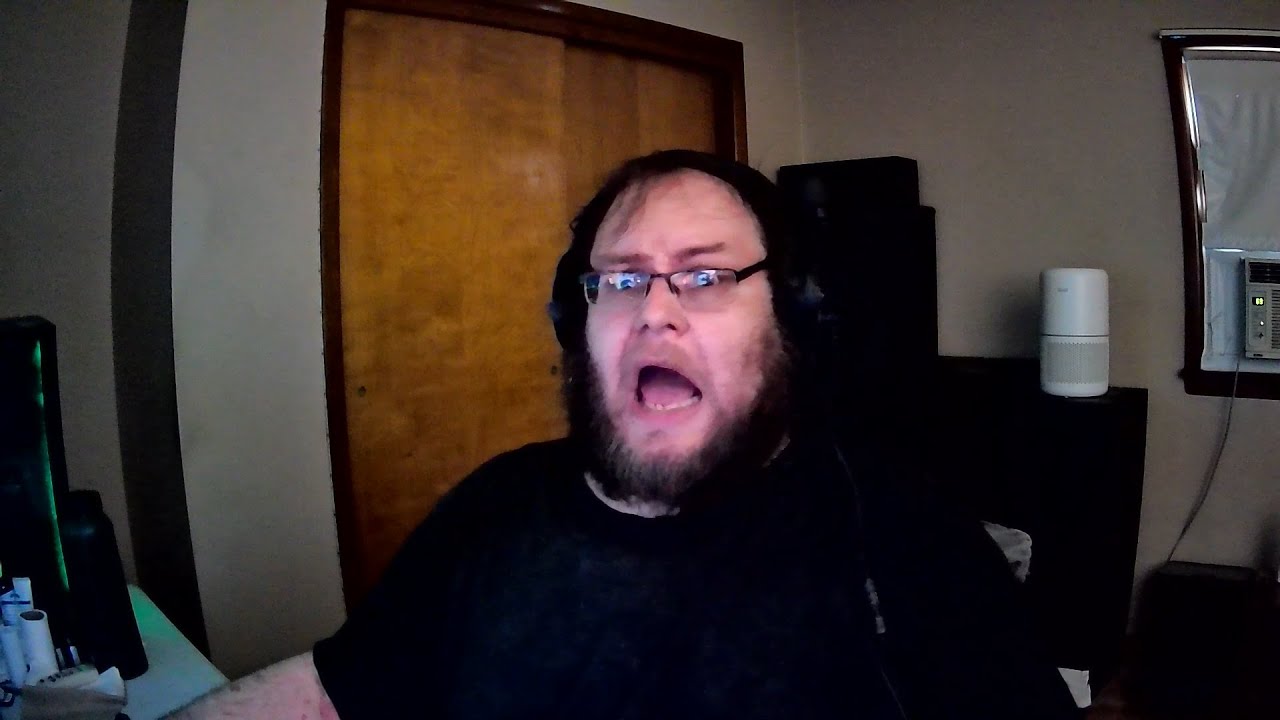
Nineteen years after the first one. Same room, mostly. He used it to point an old audience at the songs he has been writing the whole time.
There is a particular dignity in this. He did not pretend the wave was still there. He did not pretend it had never happened. He went back to the room, made the gesture again, and used the brief flare of recognition to gesture over here, please, this is what I am actually doing. The original audience mostly did not follow. A few of them did. He is still in the room.
What the Pattern Adds Up To
Four people. Four videos. Four very different paths through the years on the other side. One stayed in his bedroom and learned to love the rent his old voice still paid him. One family sold the moment to a stranger and used the money to put their son through school. One man kept filming his sky until his sky outlived him. One man came back, nineteen years later, in the same kind of room, to ask his old audience to listen to his new work.
What unifies them is not the wave. The wave is the same wave. What unifies them is what they did with the long, ordinary stretch of time on the other side of it - the part the platform did not write a feature for, the part that nobody made a leaderboard about, the part with the parents bailing you out and the kids growing up and the editor with the same beard in the same room.
Hype and the Long Beach
Ethan's morning column was about a feature designed to lift small creators onto the wave. He is right about the math. A 150x multiplier for a five-hundred-subscriber channel really is a remarkable thing for a platform like YouTube to write into its scoring. It is the closest thing to a deliberate gift the algorithm has ever offered a new voice.
The four people in tonight's column got onto the wave without any of that. Their videos went viral in years when the recommendation engine was much dumber and the platform did not, in any meaningful way, choose to lift them. They were lifted by people. Email forwards. Forum posts. A talk-show host's tweet. A 4chan thread. The wave was real. It was loud. And it was, for each of them, surprisingly short.
The part Ethan's piece does not, and cannot, address is the part that starts after the leaderboard stops updating. The part where you have to figure out who you are when the lights are off and the comments have moved on. Hype, like every algorithmic gift before it, will be brilliant at the wave. The long beach is what you walk alone.
The leaderboard remembers the moment. The person has to live with all the other ones.
What This Is Actually About
There is a particular kindness in the way each of these four people, in different shapes, made peace with the disproportion of it. They did not become bitter. Or, if they did, they did not let it be the only thing they were. Tay Zonday is still singing. He told an interviewer last year that he is grateful for the modest income the song still throws off. The Davies-Carrs sent their oldest to university and gave their video back to the world. Paul Vasquez kept loving the sky until the morning his hospital chart ran out. Gary Brolsma walked back into the same room nineteen years later, did the same dance for twenty-three seconds, and used it to ask people, gently, to listen to the things he has been writing in the years since.
If you ever go viral - and most of the people reading this will not, but some of you will - this is the column I would want you to read on the third day, when the wave has just started to recede and the comments have started to shift, and you can feel, somewhere in the back of your throat, that the next part is going to be longer than the first part.
The first part is a wave. The next part is your life. Both are real. The platform will never tell you when the first one is over. You will know. Quietly. In the middle of a Tuesday. From the room you used to film in. The lights look exactly the same. The audience, mostly, is not there. The voice still works.
And the long beach, if you let it, is somewhere you can live.
Join the conversation