
Nobody Is Actually Cooking. And That's the Whole Point.

It's late. Past 11, maybe closer to midnight. You're not hungry - you ate hours ago. But you're watching a man in a quiet Tokyo apartment pull noodles through broth with deliberate, unhurried hands. His cats are somewhere on the counter. The only sound is the soft rhythm of chopsticks against the bowl, the low simmer of something on the stove, and then a few moments of near-silence as he adjusts the light.
You're not going to make ramen tonight. You might never make ramen. But you'll watch until the bowl is finished.
There are millions of people doing exactly this right now. Not learning to cook. Not gathering recipe ideas for tomorrow's dinner. Just watching someone cook - watching the knife move through vegetables, watching butter pool and foam in a pan, watching the thing get made all the way to the end. And the question worth sitting with is: why does this feel so good?
The silence is the point
Jun Yoshizuki runs a channel called JunsKitchen. He has 5.3 million subscribers. He doesn't narrate. He doesn't add background music. He doesn't explain what he's doing or why. He just cooks - slowly, in a small apartment, while his cats wander through the frame. The Washington Post once described him as "the Bob Ross of cooking." That's exactly right.
What Bob Ross understood about painting - and what Jun seems to understand about cooking - is that watching a process complete itself is its own reward. There's no drama. There's no failure. The dish will be finished by the end of the video. You know this going in, and that certainty is exactly what makes watching feel like rest rather than tension.

Most of what you consume online is designed to leave you wanting more - the next episode, the next scroll, the next notification. Cooking videos that work like this are different. A bowl gets made. A story finishes. You can leave whenever you want, but you rarely want to.
What's actually happening in your brain
The research has caught up. A 2025 study published in PMC (Hozaki, Ezaki, Poerio and Kondo) found that watching ASMR videos reduced average pulse rate from 79.8 bpm at rest to 76.6 bpm - more than nature videos managed. That's a real, measured change in your nervous system, triggered by watching someone chop vegetables. The mechanism is parasympathetic activation - the "rest and digest" branch, the same pathway engaged during meditation.
A separate 2023 study in Frontiers in Neuroscience (Sakurai et al.) found that ASMR content activates the left nucleus accumbens - the brain's reward center, the same region engaged by music, food, and social bonding. And a 2025 study from UC Santa Barbara (Robin Nabi et al., published in Psychology of Popular Media) found that five minutes of relaxing video daily for five days produced stress relief equivalent to guided meditation, with effects lasting up to ten days after stopping.
Not because watching a cooking video is the same as meditation. But because your nervous system doesn't always draw the distinction.
There's craft here, and your brain knows it
Andrew Rea started Binging with Babish in 2016 with a simple premise: recreate dishes from movies and TV shows, filmed with the same deliberateness as the scenes they came from. What he built doesn't look like most cooking content. It looks like cinema. Every shot composed. Every step unhurried. The camera stays close, the way you watch a craftsperson who knows exactly what they're doing.
There's a specific pleasure in that. Watching expertise in motion - not as instruction, but as observation. When you don't know what to do, everything feels precarious. When someone else clearly does, and you're watching, that certainty transfers. You borrow their calm for a few minutes.
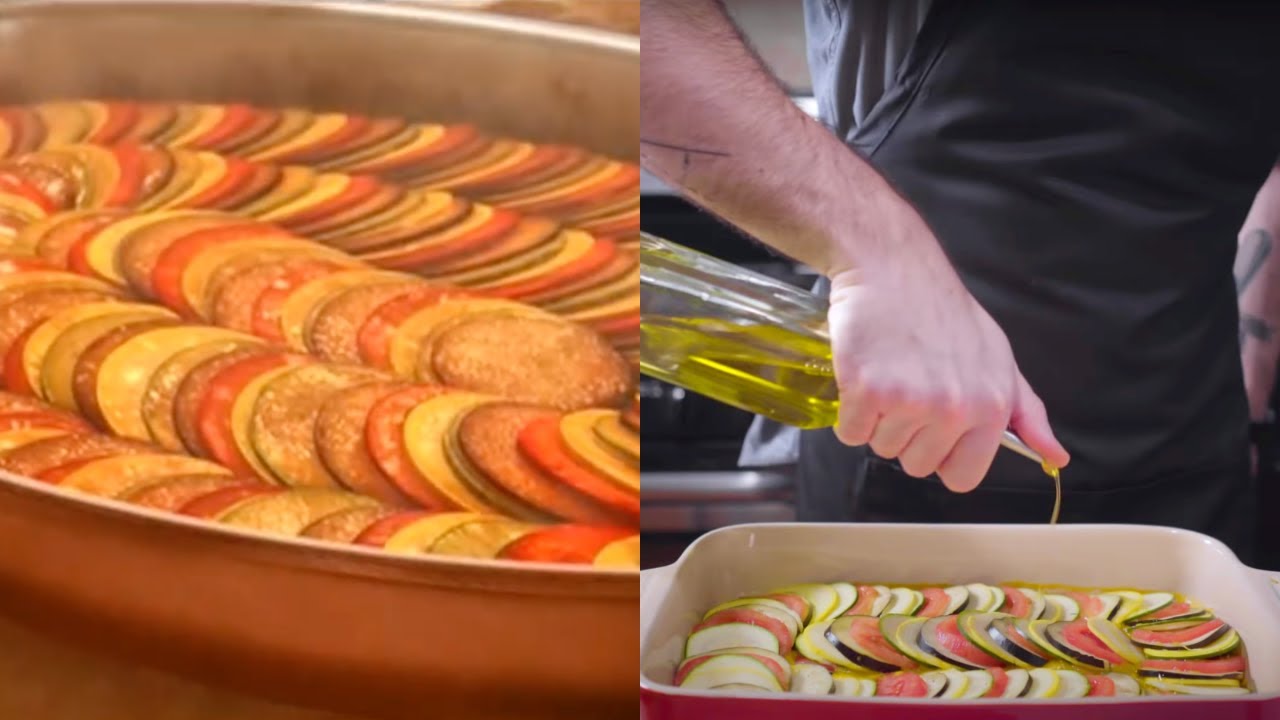
The dish will be fine. It's always fine. And for a few minutes, that certainty is enough.
The kitchen you keep coming back to
You probably don't watch just any cooking video. You return to the same channels. The same kitchens. The same hands making the same kinds of things. There's a familiarity in that - something that functions less like media consumption and more like visiting someone you know.
A 2024 study in Scientific Reports (Lotun, Lamarche et al., across 3,085 participants) found that strong parasocial bonds with creators were rated as more helpful for emotional needs than casual real-life acquaintances. When people experienced stress or social rejection, they leaned on these bonds the way they'd lean on a close friend. Which explains why returning to Jun's kitchen feels qualitatively different from watching a random cooking video you found through search.
What cooking videos offer that most content doesn't
| Quality | Cooking videos | News / social feed |
|---|---|---|
| Outcome | Always resolves clearly | Open-ended, ongoing |
| Narrative arc | Complete (start to finish) | No resolution |
| Sound design | Intentional, calming | Incidental or alarming |
| Demands from you | None | Constant attention and reaction |
| Parasocial warmth | Consistent, familiar | Variable or absent |
The consistency of a cooking channel - the same presenter, the same framing, the same rhythm of preparation - is not a limitation. It's the feature. Predictability, when you choose it, is comfort.
When people save cooking videos in tools like YouTube Bookmark Pro - full disclosure, it's what we make - the saves look different from how they save tutorials or research. There are rarely detailed notes about what to learn. The saves feel more like bookmarking a song - because the experience itself is what matters, not the information inside it. A cooking video isn't a recipe. It's a mood. And moods are worth keeping.
The next time you find yourself at 11pm watching someone carefully peel garlic into a bowl you'll never buy, notice what you're actually doing. You're not being unproductive. You're not avoiding something more important. You're watching a thing complete itself, from beginning to end, in a world where very little does.
Maybe that's exactly what you needed to see.
Join the conversation