
The YouTubers You Don't Watch. You Live With.

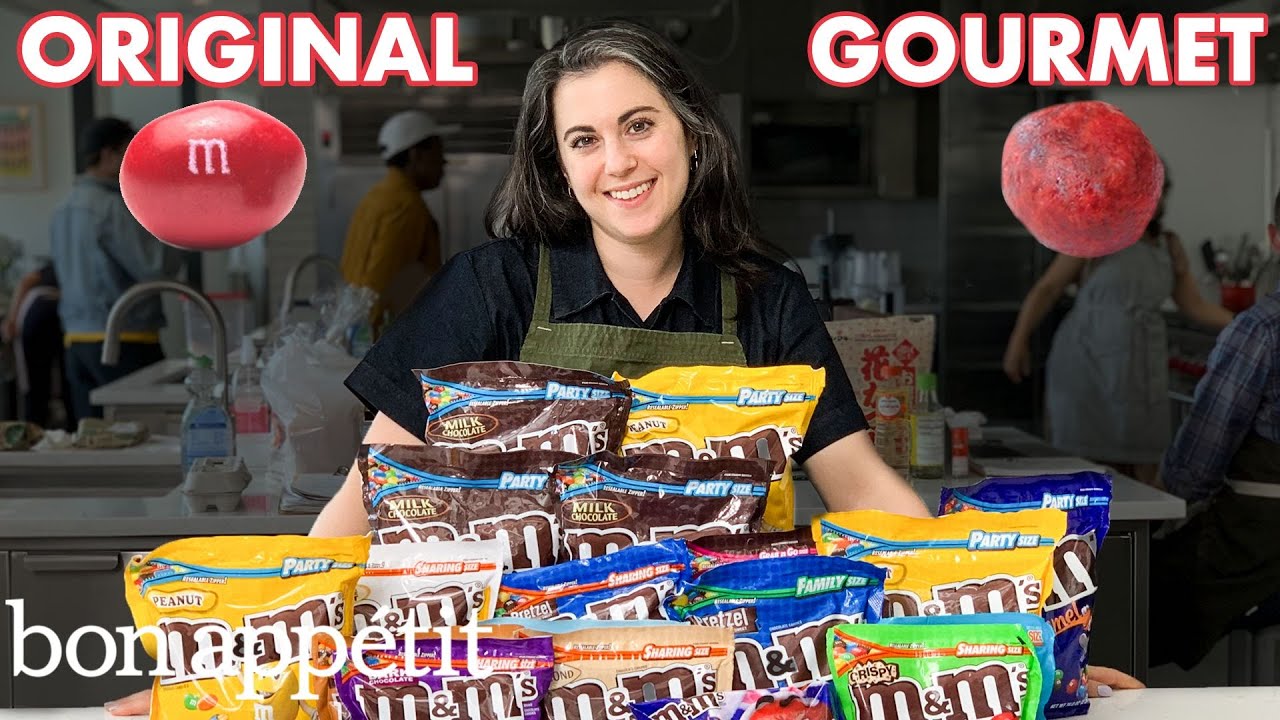
The video has been playing for nineteen minutes. I am not watching it. I'm folding laundry on the bed, half-listening to a pastry chef methodically destroy a tray of homemade M&M's because she added too much glaze and now they look like wet stones. She is not upset. She is laughing, gently, at her own seriousness. I have heard this exact laugh before. Three times, maybe. I keep the tab open anyway.
You have one of these. A channel you don't really watch. A channel you live alongside, while the dishes go in the sink and the work email gets answered and the day quietly closes itself. The algorithm does not know what to do with this kind of viewer. The watch-time is real but the attention isn't, and the replays don't follow any pattern an engagement model can predict. We tell ourselves we're listening to a podcast. We're not. We're keeping someone in the room.
The Friend Whose Failures You've Watched Three Times
The pastry chef in question is Claire Saffitz. The series is Gourmet Makes, where she'd spend a week reverse-engineering Pop-Tarts or Twinkies or Skittles into something you could plausibly make at home, and then mostly fail in interesting ways. The format was simple and the chemistry of her presence on camera was not: she took the absurd assignment seriously, kept apologizing to no one in particular, and built actual relationships with her coworkers in real time on a YouTube channel. The series ran from 2017 through 2020 and turned the entire Bon Appétit Test Kitchen into comfort television. People watched the M&M episode at midnight and again at lunch and again the following Tuesday while doing taxes.
The article in RUSSH identified the trick exactly. "It's the uncovering of the peaks, pits and mistakes that makes us want to come back," the writer noted. "The human-ness in cooking that they admit to is better than any tutorial." The recipe is not the point. The recipe is the trellis. What you are actually watching is somebody being patient with their own work, in a kitchen that looks like a real kitchen, with the kind of small failures that don't matter and the kind of small decisions that do.
The Hands You'd Know Without a Face
If Gourmet Makes is one end of the comfort-cooking spectrum, the other end is Pasta Grannies, a YouTube channel that has done one thing for ten years: visit Italian grandmothers in their kitchens and film them making pasta. Vicky Bennison, the British producer who started the project in 2014, has released over five hundred videos and reached nearly a million subscribers. The most-watched episodes feature women in their late nineties and one-hundreds. Time Out described the channel as "nothing but Italian grandmas making pasta," and meant it as the highest praise.
What's astonishing about Pasta Grannies is that very little happens. A woman pours flour on a wooden board. She makes a well, breaks an egg, mixes with her fingers. She speaks Italian, dialect, sometimes none at all. There is no narration. The grandmothers don't perform for the camera; they tolerate it. The episode below features Irma, who was 103 years old when this was filmed. She rolls tagliatelle the way her own grandmother taught her. The hands move. The room is quiet. You don't have to know anything to feel something.

What the Research Actually Says
The instinct to call this passive viewing is wrong. Roamers Therapy describes comfort media as "repeatedly consumed content chosen for emotional relief, security, and predictability rather than novelty," and the research it draws from is consistent across studies: returning to familiar content reduces anxiety, lowers cognitive strain, and stabilizes mood. The brain treats a video it has already processed as safe. The story is settled. The ending is known. There is room left over to think about the rest of the day.
A 2023 CableTV.com survey of 1,000 Americans found 87% had a "comfort show," 70% watched it specifically to handle stress, and 67% reported being emotionally attached to a character. The survey was about television, but the same psychology travels intact onto YouTube - and the platform's structure (long videos, channel-based subscriptions, repeat watch counts) is arguably better suited to it.
The Four-Hour Stranger
And then there is the strangest comfort-YouTube genre of them all: the long-form video essay. Not eleven minutes. Not thirty. Hours. Sometimes more hours than the movie they're about. The unofficial patron saint of this category is Jenny Nicholson, whose four-hour video "The Spectacular Failure of the Star Wars Hotel" passed eight million views and got a Disney copyright claim within a week of upload. Rolling Stone called it the must-see documentary of the summer. NPR compared it to a season of prestige TV. People watched it twice, three times, in segments, on second monitors while they worked.
You don't watch a four-hour video the way you watch a thirty-minute one. You inhabit it. Jenny Nicholson sets up her chair, opens with a story, takes a long breath, and gets into the details of a six-thousand-dollar Disney experience that should have been good and instead was disorienting and sad. The pace is slow on purpose. The footage is hers. The conclusions are personal. By the third hour you have stopped checking the timestamp and started thinking of her as someone you know.

Two Different YouTubes, in the Same Tab
The reason comfort YouTube is hard to talk about is that it doesn't look like watching. It looks like leaving something on. But it isn't the same as background music, and it isn't the same as a podcast either, because the human is right there if you glance up. The category lives between intentions, which is also why the platform's metrics keep underestimating it. There are two different YouTubes happening on the same page. One is built for discovery. The other is built for keeping company.
Comfort media is "repeatedly consumed content chosen for emotional relief, security, and predictability rather than novelty." - Roamers Therapy, Rewatch Relisten Repeat (2024)
Ethan wrote this morning about the Chrome extension permissions nobody reads, the dialog box that quietly stays accurate while we learn to look past it. Comfort YouTube is the warmer cousin of that observation. Both are about the gap between the platform's official story of what it is and the actual lived behavior of the people inside it. The dialog says read and change all your data and we don't read it. The algorithm says watch this next and we don't click it. We replay the M&M episode instead.
The chefs and the grannies and the four-hour Star Wars critic don't know any of this. They made the videos and went home. We pulled them off the shelf the next time we needed someone in the room. The comfort isn't in the topic. It's in the fact that the same person, doing the same thing, is still there - exactly where you left them, willing to start the story over from the beginning. That's not what YouTube was built for. It's what YouTube turned out to be good at, when nobody was watching closely enough to optimize it away.
The laundry is folded. The chef is laughing again at the same wet stones. I'll close the tab in a minute. Tomorrow the dishes will pile up again, and she'll be back, and so will I.
Join the conversation